Showing posts with label Virtue and Moir. Show all posts

Tuesday, April 6, 2010

The best and worst from '09-10

After more than seven long months of thrills, spills and fierce competition, the figure skating season has finally come to a close. From Yu-Na Kim's stunning Olympic victory to Mirai Nagasu's breakthrough, to Domnina & Shabalin's controversial Original Dance, here are the best and worst from 2009-10.

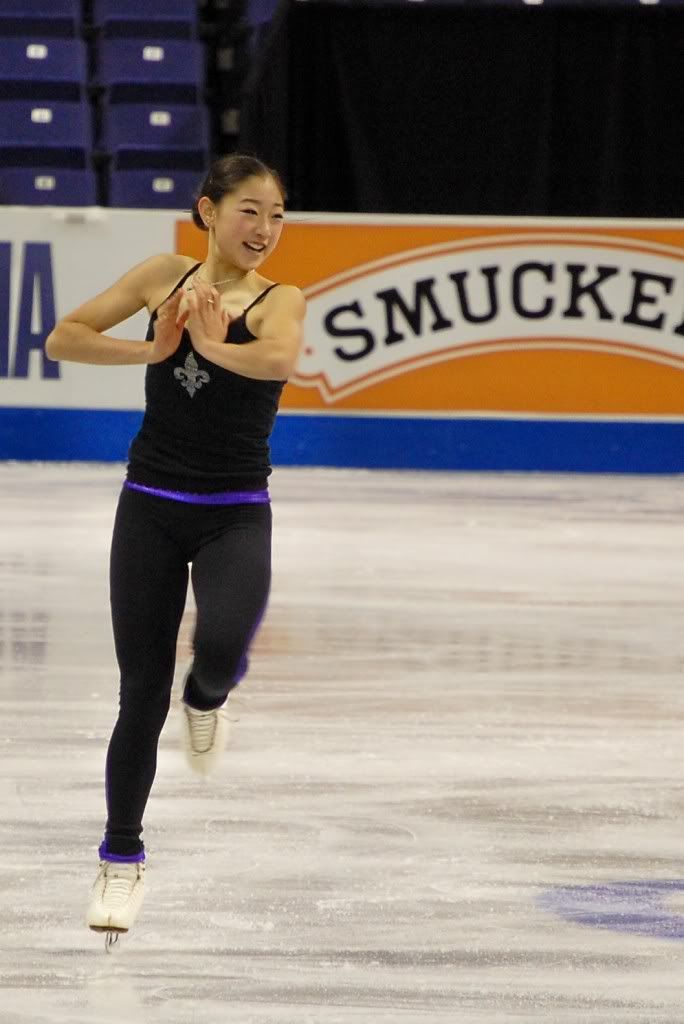
(Left: One of my favorite pictures I took of Mirai Nagasu at the U.S. Championships. Nagasu was most definitely a highlight of the season).

Best Pairs Moments:
Gold-- After back-to-back bronze medals in 2002 and 2006, the Chinese team of Xue Shen & Hongbo Zhao finally captured Olympic gold in Vancouver with two stunning programs. Though their free skate wasn't entirely perfect, the duo capped off an illustrious career and will forever be remembered as one of the greatest teams of all time, alongside Russian legends Gordeeva & Grinkov and Rodnina & Zaitsev.

Silver-- Amanda Evora's heartfelt reaction upon learning she and partner Mark Ladwig had earned a spot on the U.S. Olympic team. The team had spent years hovering around the 4-6 range at Nationals but put it all on the line in Spokane. Perhaps even more impressive is the fact that they were able to gain confidence from their U.S. silver medal and earn top-1o finishes at both the Olympics and World Championships.

Bronze--The free skate of China's Qing Pang & Jian Tong at the Olympic Games in Vancouver. They bested Shen and Zhao in that segment with a world-record score of 141.81 points en route to the silver medal overall in their third Olympic appearance.

Worst Pairs Moments:
-- Keauna McLaughlin & Rockne Brubaker's short program at the U.S. Nationals in January. Two huge mistakes and other small errors took them completely out of contention for the Olympic team, and seeing Keauna cry backstage after was heartbreaking. Here's hoping they come back strong next season!

-- Yuko Kavaguti & Alexander Smirnov's odd long program to a remix of the "Blue Danube Waltz." The strange, gimmicky choreography and Yuko's mid-program costume transformation didn't help, either.

Best Men's Moments:
Gold-- Jeremy Abbott's flawless free skate at the U.S. Championships. In successfully defending his National title, Jeremy landed 8 perfect triple jumps and one gorgeous quad toe loop. He would go on to defeat (eventual) Olympic gold medalist Evan Lysacek by more than 25 points en route to a 9th place finish in Vancouver and a 5th place finish at the World Championships in Torino, Italy.

Silver-- Speaking of Evan Lysacek, his emotionally charged Olympic short program was definitely a highlight of the season. The 24-year old American would score a personal best 90.30 points for that segment before coming from behind to defeat defending Olympic champ Evgeni Plushenko of Russia. His victory in Vancouver marked the first time an American man had won Olympic gold since Brian Boitano in 1988.

Bronze-- Japanese star Daisuke Takahashi's comeback from a nearly career-ending injury is the stuff legends are made of. With each competition, he appeared to get stronger and stronger, and capped the season off with Olympic bronze and a World title, the first Japanese man to medal at the Games and win a World Championship. On top of that, his "La Strada" free skate is my favorite men's program of the season, so kudos to Dai.

Worst Men's Moments
-- Plushenko's incessant whining about how he deserved to win the Olympics over Lysacek simply because he landed a quadruple jump and Lysacek did not. News flash, Evgeni: it's not called "figure jumping." Quad or no quad, Evan was far better than you in terms of spins, footwork, choreography, transitions and the triple jumps. Your silver medal is a great achievement, so stop trying to rain on Evan's parade.

-- Elvis Stojko's rants about "manly skating" and "feminine skating." Like Plushenko, perhaps Elvis should brush up on the judging system rules before running his mouth.

-- Johnny Weir's scores at the Olympics. I don't know what the judges were watching, but Johnny was FAR better than Canadian Patrick Chan in Vancouver. The scores did not accurately reflect what happened on the ice, and Weir's near-flawless programs should have put him into 4th place overall, not 6th.

Best Ice Dance Moments
Gold-- The season that Meryl Davis & Charlie White had, winning another U.S. title and becoming the Grand Prix Final champs and World and Olympic silver medalists. They are arguably the most exciting ice dance duo in a long time, and this lift is simply outstanding.
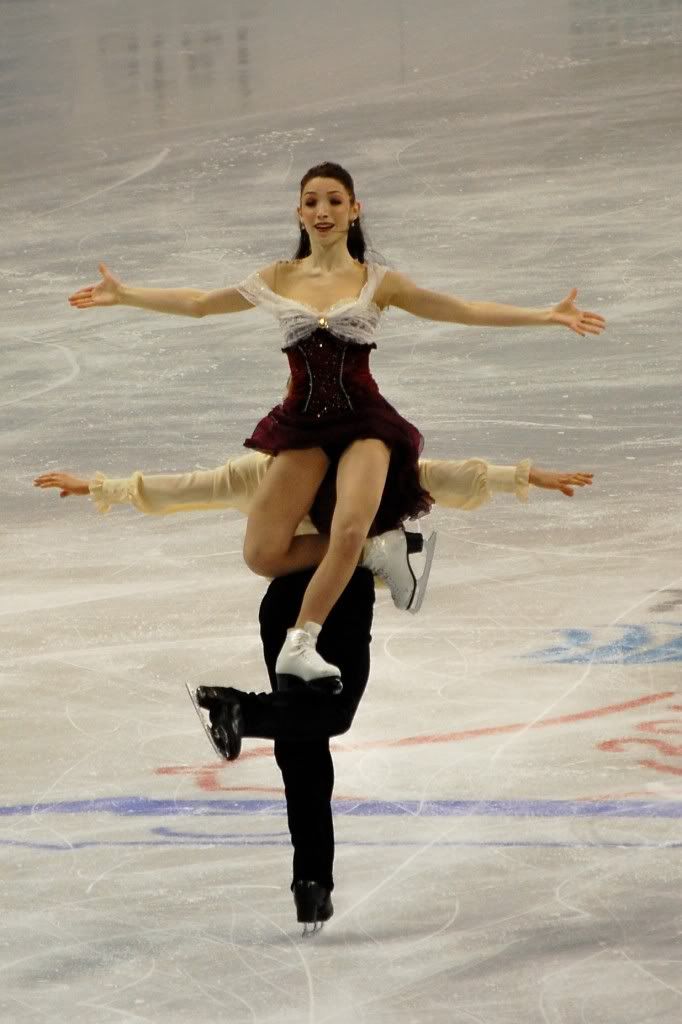
Silver-- Hearing Tessa Virtue & Scott Moir (and all of Canada, really) singing "O, Canada" during the medal ceremony in Vancouver. While I'm not Canadian, it was an amazing, goosebump-inducing moment.

Bronze-- The free dance of Kimberly Navarro & Brent Bommentre to U2 and Mary J. Blige's version of "One." There aren't really words to describe this program, except that it incredibly moving to see live and in person at Nationals. This duo will certainly be missed.

Worst Ice Dance Moments
-- The Original Dance of Russian champs Oksana Domnina & Maxim Shabalin. What. Were. They. Thinking?!?! While their intentions were probably good, their "Australian Aboriginal" program came across as extremely offensive to many. Aside from that, the construction of the program was not Olympic-caliber, and Max's declining knee strength and skating skills didn't help either. And those costumes? Oy.

-- Tanith Belbin & Ben Agosto's scores at the Olympics. They skated three flawless programs yet still finished 4th behind Domnina/Shabalin. Like Weir's scores in the men's event, the marks for Belbin/Agosto had me scratching my head.

Best Ladies Moments
Gold-- Yu-Na Kim's Olympic gold medal winning free skate was an obvious choice. Never before had she performed such a perfect long program, and to save it for the biggest stage of all is quite remarkable. Along the way, she set another world-record score in the free skate of 150.06, and an overall record of 228.56, more than 23-points ahead of silver medalist Mao Asada of Japan. Whether she decides to continue competing or retire from amateur skating, Kim's legend in the skating world is secure.

Silver-- Mirai Nagasu's breakthrough was another highlight of the 09-10 season for me. After a terrible year in 08-09, Mirai came back in a big way with better jumps, a world-class coach and the joy she exuded when she first burst onto the scene in 2007. Her steady climb this season resulted in a silver medal finish at Nationals, a 4th place finish in her senior international championship debut at the Olympics, and a top-7 finish at Worlds. Her winning short program at the World Championships has set her up beautifully as a serious world contender over the next four years.

Bronze-- Joannie Rochette's heartfelt tribute to her late mother, Therese, at the Olympics in Vancouver. It still amazes me that she was able to compete only two days after her mother's passing, and to win an Olympic bronze medal with the stunning performances that she gave is truly awe-inspiring. Kudos to you, Joannie.

Worst Ladies Moments
-- Mao Asada's meltdown at the Rostelecom Cup in October was not a pretty sight. A 6th place finish in the relatively weak field there meant no Grand Prix Final trip for Asada. The only bright spot in all of this was that perhaps her poor performances motivated her for the rest of the season, as she went on to capture Olympic silver and another World title.

-- The entire ladies free skate event at the World Championships can be summed up in one word: "yikes." Falls, popped jumps, and double-footed landings plagued many of the Worlds best skaters last month in Torino. The fact that Yu-Na Kim was able to win silver despite three huge mistakes in her short program (an under rotated triple flip, a messy layback which ended up not counting, and a near-fall on her spiral sequence) and a fall in her free skate is quite telling. Aside from Nagasu's short program, this is was not a memorable event.

-- Carolina Kostner's Olympic-sized implosion in Vancouver is legendary--and not in a good way. It brought back memories of Laetitia Hubert's "human Zamboni" free skate from the 1992 Olympics where she fell four times. Carolina rebounded somewhat at Worlds with a 6th place finish, but 09-10 seems like a season she hopes to forget.

Friday, November 27, 2009

'Tis the season for Grand Prix Final withdrawals

With the six regular season events all wrapped up, the Grand Prix Final is set to take place next weekend in Tokyo, Japan. The top six point-scorers in each discipline will compete, minus a few exceptions.

Americans Tanith Belbin and Ben Agosto are out of the dance event after Tanith required emergency oral surgery this week. Though they have received a lot of flack for pulling out of the Final, I don't fault them at all. It can take up to a few weeks to recover from wisdom tooth surgery, and if they can't be at their absolute best, there is no reason why they should compete and risk a poor performance. Their scores this season rank them below Canadians Tessa Virtue and Scott Moir, as well as U.S. champions Meryl Davis and Charlie White. Hopefully Belbin and Agosto will rework their programs and make sure their levels are up to par so they can compete with their two younger rivals.

Belbin and Agosto's replacements, Jana Khokhlova and Sergei Novitski, are also out of the Final, as she has come down with the flu. Canadians Vanessa Crone and Paul Porier, the second alternates, will compete in their place.

France's Brian Joubert is also out of the men's event after suffering a cut on his foot in training. He is replaced by Tomas Verner of the Czech Republic, the silver medalist from the Trophee Eric Bompard event earlier this fall.

Grand Prix Final Competitors:
Men: Nobunari Oda (JPN), Evan Lysacek (USA), Daisuke Takahashi (JPN), Jeremy Abbott (USA), Johnny Weir (USA), Tomas Verner (CZE)
Ladies: Yu-Na Kim (KOR), Miki Ando (JPN), Joannie Rochette (CAN), Alena Leonova (RUS), Ashley Wagner (USA), Akiko Suzuki (JPN)
Pairs: Shen/Zhao (CHN), Savchenko/Szolkowy (GER), Pang/Tong (CHN), Kavaguti/Smirnov (RUS), Mukhortova/Trankov (RUS), Zhang/Zhang (CHN)
Dance: Virtue/Moir (CAN), Davis/White (USA), Pechalat/Bourzat (FRA), Kerr/Kerr (GBR), Cappellini/Lanotte (ITA), Crone/Poirier (CAN)

Sunday, October 18, 2009

Kim sets new world record; Canada, Japan, Russia also golden in Paris

Yu-Na Kim just keeps rolling.

The 19-year old phenom from South Korea set a new world record Saturday at the Trophee Eric Bompard in Paris, the first Grand Prix event of the season. Her overall score of 210.03 demolished the rest of the ladies, and put her ahead of rival Mao Asada by more than 36 points.

After a 76.08 point short program, Kim probably could have skated around the rink doing cross-overs and single jumps and still won the gold medal. Instead, she landed five clean triple jumps with ease, including a difficult triple Lutz-triple toe loop combination as well as a double Axel-triple toe loop combination. Her only mistake came on a planned triple flip; heading into it, she said something didn't feel right. Rather than risk a fall and disrupt the flow of the program, Kim simply skated right through the element, which makes her world record scores even more impressive.

Asada, the pride of Japan, finished a distant second after an up-and-down free skate. She nailed her opening triple Axel combination after botching it in the short program, but then underrotated other jumps and fell on a double Axel at the end of her program. On top of that, her program is uninspiring. The music and choreography are far too heavy for this exuberant skater, and all of the joy seems gone from her skating. Whether this is her coach Tatiana Tarasova's "influence" or not, something isn't right. One can only hope the Japanese Skating Federation will step in and demand either a coaching change or some music changes before Vancouver.

Another Japanese skater, Yukari Nakano, was third, with Americans Caroline Zhang and Alexe Gilles in fourth and fifth, respectively. Zhang is still recovering from a knee injury this summer, and it was evident in her performances here. The good news for her is that her second event is five weeks away -- plenty of time for her to regroup and train hard. For Gilles, a top-five finish in her senior Grand Prix debut is nothing to sneeze at, and she'll look to build upon this momentum a month from now at Skate America.

In ice dancing, Canadians Tessa Virtue and Scott Moir took gold, as expected. Their stirring free dance to music by Gustav Mahler features intricate and inventive lifts, including one where Virtue "jumps" off of her partner's leg into a full turn and then lands on the ice next to him. With reigning World champions Oksana Domnina and Maxim Shabalin out right now due to injury, teams like Virtue/Moir and the American teams of Meryl Davis/Charlie White and Tanith Belbin/Ben Agosto have got to be dreaming big of the top prize in Vancouver. The world of ice dance is so unpredictable and deep right now, that it may very well be the most exciting discipline of the season.

In the men's event, Japan's Nobunari Oda was flawless in his "Charlie Chaplin" program. Even though he has yet to medal at the World Championships, Oda will be a serious threat to the Olympic podium come February, with or without a quadruple jump. Tomas Verner took silver here, and American Adam Rippon won his first Grand Prix medal by taking the bronze. Perhaps the most shocking story of the men's event was Brian Joubert's disappointing fourth place finish on home ice. Joubert looked lethargic and slow, and his jumps didn't have the ease and fluidity that they normally do. Although it's early in the season, Joubert must improve drastically for his second event if he has any hopes of making the Grand Prix Final and building momentum towards the Olympics.

Finally, in pairs, Russians Maria Mukhortova and Maxim Trankov were the surprise winners over two-time and reigning World champs Aliona Savchenko and Robin Szolkowy of Germany who placed third. Canadians Jessica Dube and Bryce Davison were second, while American's Rena Inoue and John Baldwin used their trademark throw triple Axel to vault them from fifth to fourth in the standings.

The Grand Prix series continues this coming week in Moscow at the Rostelecom Cup. 2006 Olympic champion Evgeni Plushenko makes his return to competition here, while Asada will face off against her main Japanese rival, 2007 World champion Miki Ando. The United States will be represented well by Davis/White in ice dance, Keauna McLaughlin and Rockne Brubaker in pairs, Alissa Czisny and Ashley Wagner in the ladies event, and three-time U.S. champion Johnny Weir in men's.

Monday, October 12, 2009

Cohen's absence doesn't dampen excitement in Grand Prix opener

Sasha Cohen's withdrawal from Trophee Eric Bompard - the Grand Prix series opener - didn't come as much of a shock to those in the skating community.

Cohen, the 2006 Olympic silver medalist, had her comeback bid interrupted last Thursday when she announced that she would be withdrawing from the event due to tendinitis in her calf. Although this is bad news in her attempt to make a third consecutive Olympic team, the ladies field in Paris this week is still the deepest of all the Grand Prix events.

In her first competition of the season, reigning World champion Yu-Na Kim of Korea looks to capture her eighth Grand Prix gold medal. Armed with a new triple-triple combination (Lutz-toe loop), Kim is the overwhelming favorite here, though the competition will be nipping at her heels.

2008 World champ Mao Asada will be battling it out with her arch-rival Kim for the top spot. Asada, the 19-year old Japanese phenom, appears to have plateaued or even regressed since her '08 Worlds win. At the recent Japan Open invitational, Asada was only credited with three clean triple jumps, and her trademark triple Axel was downgraded and awarded a Grade of Execution of -2.24. She finished third among the ladies competing there, far behind Canada's Joannie Rochette and nearly 8-points off of Laura Lepisto of Finland. With the plethora of top ladies competing in Paris, Asada cannot rely solely upon her Program Component Scores to carry her to the podium.

Among the other competitors are Italy's Carolina Kostner, a two-time World medalist, and Japan's Yukari Nakano. Kostner changed coaches in the off-season, and is now under the tutelage of iconic American coach Frank Carroll in Los Angeles (Carroll also coaches Americans Evan Lysacek and Mirai Nagasu). In an Italian TV news clip that recently surfaced, Kostner's jumps look more secure and solid, marking her as a legitimate threat to Kim and Asada.

The United States women will be represented by Caroline Zhang and Alexe Gilles. Zhang, the reigning U.S. bronze medalist, is recovering from a summer knee injury, but should be much improved over her form at the Golden West Championships in early September. Known for her consistency, Zhang could very well find herself in medal contention, though she may have to rely on out-scoring the rest of the field on spins and hoping for mistakes from the other ladies.

In the other disciplines in Paris...Brian Joubert will face off against Japan's Nobunari Oda, with American Adam Rippon looking to break through for his first Grand Prix medal. Tessa Virtue and Scott Moir of Canada will likely be golden in ice dance, and two-time World pairs champions Aliona Savchenko and Robin Szolkowy of Germany will look to top Russian's Maria Mukhortova and Maxim Trankov, Canadians Jessica Dube and Bryce Davison, and Americans Rena Inoue and John Baldwin.