For the sole purpose of enjoyment, speculation and "what ifs," I've compiled a list of the average scores of all the senior-level skaters who will be at Nationals next month. Listed below are the pairs overall, short program and free skate scores averaged from all competitions this fall (JGP events, GP events, JGP/GP Finals, Senior B's, Regionals, Sectionals).
Please comment with your thoughts, opinions, Nationals predictions, etc!
Ladies to follow shortly...
Senior Men
Average Overall Scores:
1. Adam Rippon (218.09)
2. Jeremy Abbott (217.71)
3. Brandon Mroz (209.89)
4. Armin Mahbanoozadeh (194.11)
5. Richard Dornbush (192.23)
6. Ross Miner (191.88)
7. Douglas Razzano (185.70) [one event only, Ice Challenge]
8. Grant Hochstein (185.46)
9. Stephen Carriere (184.20)
10. Jason Brown (181.95)
11. Joshua Farris (180.31)
12. Keegan Messing (180.24)
13. Andrew Gonzales (180.09)
14. Alex Johnson (179.05)
15. Jonathan Cassar (178.31)
16. Parker Pennington (176.26)
17. Scott Dyer (175.26)
18. Jason Wong (174.03)
19. Sean Rabbitt (173.50)
20. Christopher Caluza (162.89)
21. Wesley Campbell (160.41)
22. Lloyd Ting (147.74)
Average SP Scores:
1. Jeremy Abbott (76.12)
2. Adam Rippon (75.74)
3. Brandon Mroz (71.41)
4. Douglas Razzano (68.93) [one event only, Ice Challenge]
5. Ross Miner (65.98)
6. Keegan Messing (65.13)
7. Richard Dornbush (64.18)
8. Joshua Farris (64.02)
9. Alex Johnson (62.82)
10. Armin Mahbanoozadeh (60.94)
11. Andrew Gonzales (60.74)
12. Parker Pennington (59.70)
13. Jason Brown (59.50)
14. Stephen Carriere (59.14)
15. Scott Dyer (58.99)
16. Grant Hochstein (58.19)
17. Jonathan Cassar (58.14)
18. Sean Rabbitt (57.18)
19. Jason Wong (55.15)
20. Christopher Caluza (54.44)
21. Wesley Campbell (49.35)
22. Lloyd Ting (48.66)
Average FS Scores:
1. Adam Rippon (142.35)
2. Jeremy Abbott (141.59)
3. Brandon Mroz (138.48)
4. Armin Mahbanoozadeh (133.17)
5. Richard Dornbush (128.05)
6. Grant Hochstein (127.27)
7. Ross Miner (125.90)
8. Stephen Carriere (125.06)
9. Jason Brown (122.45)
10. Jonathan Cassar (120.17)
11. Andrew Gonzales (119.35)
12. Jason Wong (118.88)
13. Douglas Razzano (116.77) [one event only, Ice Challenge]
14. Parker Pennington (116.56)
15. Sean Rabbitt (116.32)
16. Joshua Farris (116.29)
17. Scott Dyer (116.27)
18. Alex Johnson (116.23)
19. Keegan Messing (115.11)
20. Wesley Campbell (111.06)
21. Christopher Caluza (108.45)
22. Lloyd Ting (99.08)
Showing posts with label Jeremy Abbott. Show all posts
Showing posts with label Jeremy Abbott. Show all posts
Wednesday, December 15, 2010


Tuesday, April 6, 2010
The best and worst from '09-10
After more than seven long months of thrills, spills and fierce competition, the figure skating season has finally come to a close. From Yu-Na Kim's stunning Olympic victory to Mirai Nagasu's breakthrough, to Domnina & Shabalin's controversial Original Dance, here are the best and worst from 2009-10.
 (Left: One of my favorite pictures I took of Mirai Nagasu at the U.S. Championships. Nagasu was most definitely a highlight of the season).
Best Pairs Moments:
Gold-- After back-to-back bronze medals in 2002 and 2006, the Chinese team of Xue Shen & Hongbo Zhao finally captured Olympic gold in Vancouver with two stunning programs. Though their free skate wasn't entirely perfect, the duo capped off an illustrious career and will forever be remembered as one of the greatest teams of all time, alongside Russian legends Gordeeva & Grinkov and Rodnina & Zaitsev.
Silver-- Amanda Evora's heartfelt reaction upon learning she and partner Mark Ladwig had earned a spot on the U.S. Olympic team. The team had spent years hovering around the 4-6 range at Nationals but put it all on the line in Spokane. Perhaps even more impressive is the fact that they were able to gain confidence from their U.S. silver medal and earn top-1o finishes at both the Olympics and World Championships.
Bronze--The free skate of China's Qing Pang & Jian Tong at the Olympic Games in Vancouver. They bested Shen and Zhao in that segment with a world-record score of 141.81 points en route to the silver medal overall in their third Olympic appearance.
Worst Pairs Moments:
-- Keauna McLaughlin & Rockne Brubaker's short program at the U.S. Nationals in January. Two huge mistakes and other small errors took them completely out of contention for the Olympic team, and seeing Keauna cry backstage after was heartbreaking. Here's hoping they come back strong next season!
-- Yuko Kavaguti & Alexander Smirnov's odd long program to a remix of the "Blue Danube Waltz." The strange, gimmicky choreography and Yuko's mid-program costume transformation didn't help, either.
Best Men's Moments:
Gold-- Jeremy Abbott's flawless free skate at the U.S. Championships. In successfully defending his National title, Jeremy landed 8 perfect triple jumps and one gorgeous quad toe loop. He would go on to defeat (eventual) Olympic gold medalist Evan Lysacek by more than 25 points en route to a 9th place finish in Vancouver and a 5th place finish at the World Championships in Torino, Italy.
Silver-- Speaking of Evan Lysacek, his emotionally charged Olympic short program was definitely a highlight of the season. The 24-year old American would score a personal best 90.30 points for that segment before coming from behind to defeat defending Olympic champ Evgeni Plushenko of Russia. His victory in Vancouver marked the first time an American man had won Olympic gold since Brian Boitano in 1988.
Bronze-- Japanese star Daisuke Takahashi's comeback from a nearly career-ending injury is the stuff legends are made of. With each competition, he appeared to get stronger and stronger, and capped the season off with Olympic bronze and a World title, the first Japanese man to medal at the Games and win a World Championship. On top of that, his "La Strada" free skate is my favorite men's program of the season, so kudos to Dai.
Worst Men's Moments
-- Plushenko's incessant whining about how he deserved to win the Olympics over Lysacek simply because he landed a quadruple jump and Lysacek did not. News flash, Evgeni: it's not called "figure jumping." Quad or no quad, Evan was far better than you in terms of spins, footwork, choreography, transitions and the triple jumps. Your silver medal is a great achievement, so stop trying to rain on Evan's parade.
-- Elvis Stojko's rants about "manly skating" and "feminine skating." Like Plushenko, perhaps Elvis should brush up on the judging system rules before running his mouth.
-- Johnny Weir's scores at the Olympics. I don't know what the judges were watching, but Johnny was FAR better than Canadian Patrick Chan in Vancouver. The scores did not accurately reflect what happened on the ice, and Weir's near-flawless programs should have put him into 4th place overall, not 6th.
Best Ice Dance Moments
Gold-- The season that Meryl Davis & Charlie White had, winning another U.S. title and becoming the Grand Prix Final champs and World and Olympic silver medalists. They are arguably the most exciting ice dance duo in a long time, and this lift is simply outstanding.
Silver-- Hearing Tessa Virtue & Scott Moir (and all of Canada, really) singing "O, Canada" during the medal ceremony in Vancouver. While I'm not Canadian, it was an amazing, goosebump-inducing moment.
Bronze-- The free dance of Kimberly Navarro & Brent Bommentre to U2 and Mary J. Blige's version of "One." There aren't really words to describe this program, except that it incredibly moving to see live and in person at Nationals. This duo will certainly be missed.
Worst Ice Dance Moments
-- The Original Dance of Russian champs Oksana Domnina & Maxim Shabalin. What. Were. They. Thinking?!?! While their intentions were probably good, their "Australian Aboriginal" program came across as extremely offensive to many. Aside from that, the construction of the program was not Olympic-caliber, and Max's declining knee strength and skating skills didn't help either. And those costumes? Oy.
-- Tanith Belbin & Ben Agosto's scores at the Olympics. They skated three flawless programs yet still finished 4th behind Domnina/Shabalin. Like Weir's scores in the men's event, the marks for Belbin/Agosto had me scratching my head.
Best Ladies Moments
Gold-- Yu-Na Kim's Olympic gold medal winning free skate was an obvious choice. Never before had she performed such a perfect long program, and to save it for the biggest stage of all is quite remarkable. Along the way, she set another world-record score in the free skate of 150.06, and an overall record of 228.56, more than 23-points ahead of silver medalist Mao Asada of Japan. Whether she decides to continue competing or retire from amateur skating, Kim's legend in the skating world is secure.
Silver-- Mirai Nagasu's breakthrough was another highlight of the 09-10 season for me. After a terrible year in 08-09, Mirai came back in a big way with better jumps, a world-class coach and the joy she exuded when she first burst onto the scene in 2007. Her steady climb this season resulted in a silver medal finish at Nationals, a 4th place finish in her senior international championship debut at the Olympics, and a top-7 finish at Worlds. Her winning short program at the World Championships has set her up beautifully as a serious world contender over the next four years.
Bronze-- Joannie Rochette's heartfelt tribute to her late mother, Therese, at the Olympics in Vancouver. It still amazes me that she was able to compete only two days after her mother's passing, and to win an Olympic bronze medal with the stunning performances that she gave is truly awe-inspiring. Kudos to you, Joannie.
Worst Ladies Moments
-- Mao Asada's meltdown at the Rostelecom Cup in October was not a pretty sight. A 6th place finish in the relatively weak field there meant no Grand Prix Final trip for Asada. The only bright spot in all of this was that perhaps her poor performances motivated her for the rest of the season, as she went on to capture Olympic silver and another World title.
-- The entire ladies free skate event at the World Championships can be summed up in one word: "yikes." Falls, popped jumps, and double-footed landings plagued many of the Worlds best skaters last month in Torino. The fact that Yu-Na Kim was able to win silver despite three huge mistakes in her short program (an under rotated triple flip, a messy layback which ended up not counting, and a near-fall on her spiral sequence) and a fall in her free skate is quite telling. Aside from Nagasu's short program, this is was not a memorable event.
-- Carolina Kostner's Olympic-sized implosion in Vancouver is legendary--and not in a good way. It brought back memories of Laetitia Hubert's "human Zamboni" free skate from the 1992 Olympics where she fell four times. Carolina rebounded somewhat at Worlds with a 6th place finish, but 09-10 seems like a season she hopes to forget.
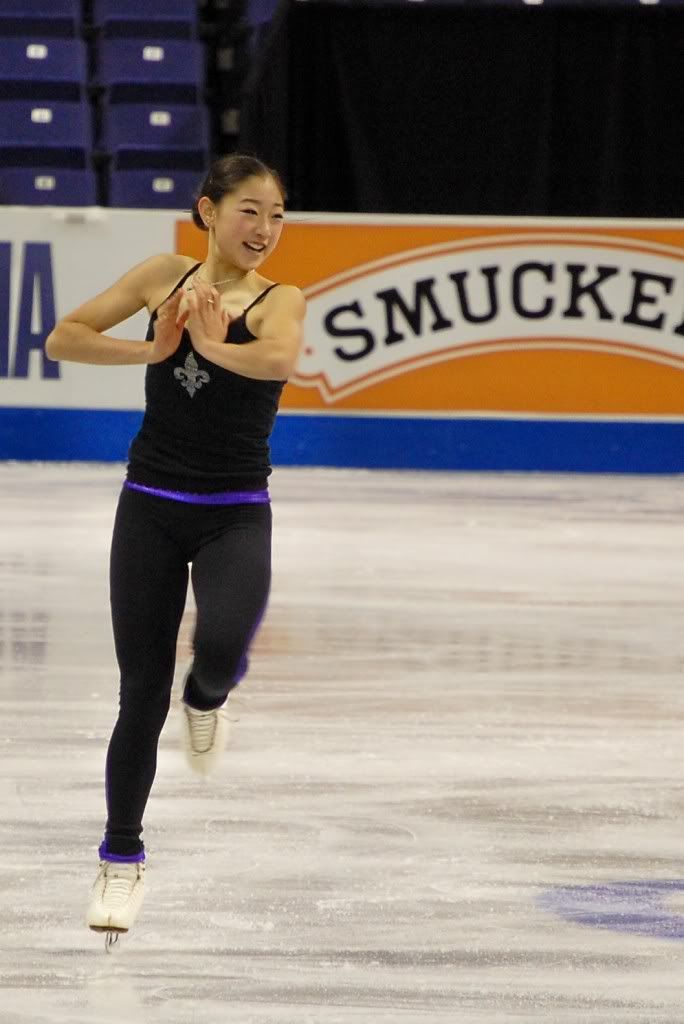 (Left: One of my favorite pictures I took of Mirai Nagasu at the U.S. Championships. Nagasu was most definitely a highlight of the season).
Best Pairs Moments:
Gold-- After back-to-back bronze medals in 2002 and 2006, the Chinese team of Xue Shen & Hongbo Zhao finally captured Olympic gold in Vancouver with two stunning programs. Though their free skate wasn't entirely perfect, the duo capped off an illustrious career and will forever be remembered as one of the greatest teams of all time, alongside Russian legends Gordeeva & Grinkov and Rodnina & Zaitsev.
Silver-- Amanda Evora's heartfelt reaction upon learning she and partner Mark Ladwig had earned a spot on the U.S. Olympic team. The team had spent years hovering around the 4-6 range at Nationals but put it all on the line in Spokane. Perhaps even more impressive is the fact that they were able to gain confidence from their U.S. silver medal and earn top-1o finishes at both the Olympics and World Championships.
Bronze--The free skate of China's Qing Pang & Jian Tong at the Olympic Games in Vancouver. They bested Shen and Zhao in that segment with a world-record score of 141.81 points en route to the silver medal overall in their third Olympic appearance.
Worst Pairs Moments:
-- Keauna McLaughlin & Rockne Brubaker's short program at the U.S. Nationals in January. Two huge mistakes and other small errors took them completely out of contention for the Olympic team, and seeing Keauna cry backstage after was heartbreaking. Here's hoping they come back strong next season!
-- Yuko Kavaguti & Alexander Smirnov's odd long program to a remix of the "Blue Danube Waltz." The strange, gimmicky choreography and Yuko's mid-program costume transformation didn't help, either.
Best Men's Moments:
Gold-- Jeremy Abbott's flawless free skate at the U.S. Championships. In successfully defending his National title, Jeremy landed 8 perfect triple jumps and one gorgeous quad toe loop. He would go on to defeat (eventual) Olympic gold medalist Evan Lysacek by more than 25 points en route to a 9th place finish in Vancouver and a 5th place finish at the World Championships in Torino, Italy.
Silver-- Speaking of Evan Lysacek, his emotionally charged Olympic short program was definitely a highlight of the season. The 24-year old American would score a personal best 90.30 points for that segment before coming from behind to defeat defending Olympic champ Evgeni Plushenko of Russia. His victory in Vancouver marked the first time an American man had won Olympic gold since Brian Boitano in 1988.
Bronze-- Japanese star Daisuke Takahashi's comeback from a nearly career-ending injury is the stuff legends are made of. With each competition, he appeared to get stronger and stronger, and capped the season off with Olympic bronze and a World title, the first Japanese man to medal at the Games and win a World Championship. On top of that, his "La Strada" free skate is my favorite men's program of the season, so kudos to Dai.
Worst Men's Moments
-- Plushenko's incessant whining about how he deserved to win the Olympics over Lysacek simply because he landed a quadruple jump and Lysacek did not. News flash, Evgeni: it's not called "figure jumping." Quad or no quad, Evan was far better than you in terms of spins, footwork, choreography, transitions and the triple jumps. Your silver medal is a great achievement, so stop trying to rain on Evan's parade.
-- Elvis Stojko's rants about "manly skating" and "feminine skating." Like Plushenko, perhaps Elvis should brush up on the judging system rules before running his mouth.
-- Johnny Weir's scores at the Olympics. I don't know what the judges were watching, but Johnny was FAR better than Canadian Patrick Chan in Vancouver. The scores did not accurately reflect what happened on the ice, and Weir's near-flawless programs should have put him into 4th place overall, not 6th.
Best Ice Dance Moments
Gold-- The season that Meryl Davis & Charlie White had, winning another U.S. title and
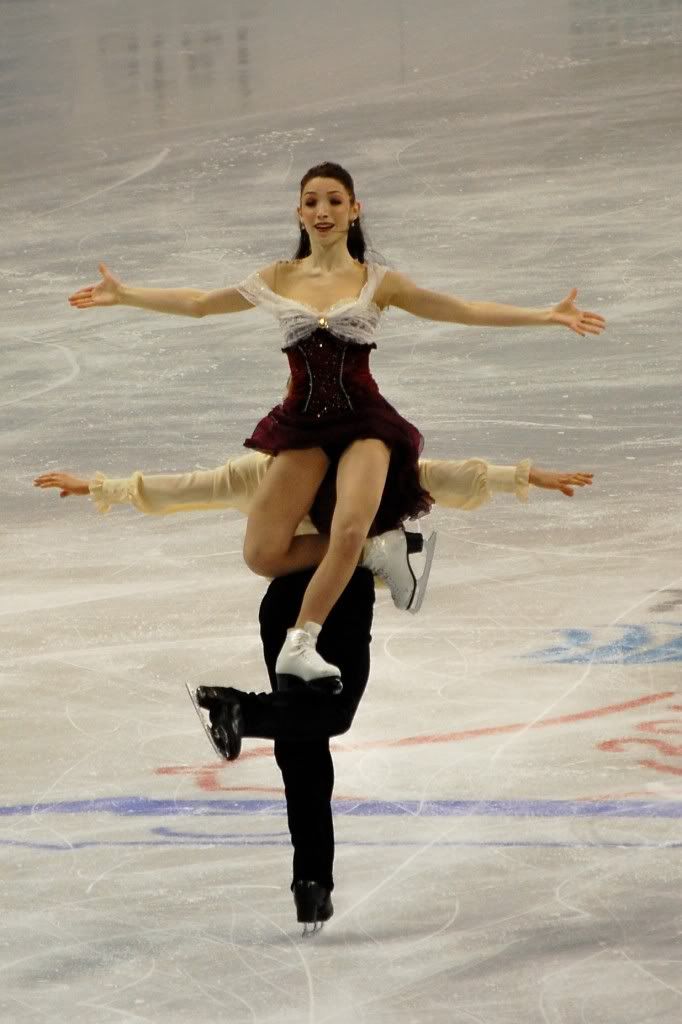 becoming the Grand Prix Final champs and World and Olympic silver medalists. They are arguably the most exciting ice dance duo in a long time, and this lift is simply outstanding.
Silver-- Hearing Tessa Virtue & Scott Moir (and all of Canada, really) singing "O, Canada" during the medal ceremony in Vancouver. While I'm not Canadian, it was an amazing, goosebump-inducing moment.
Bronze-- The free dance of Kimberly Navarro & Brent Bommentre to U2 and Mary J. Blige's version of "One." There aren't really words to describe this program, except that it incredibly moving to see live and in person at Nationals. This duo will certainly be missed.
Worst Ice Dance Moments
-- The Original Dance of Russian champs Oksana Domnina & Maxim Shabalin. What. Were. They. Thinking?!?! While their intentions were probably good, their "Australian Aboriginal" program came across as extremely offensive to many. Aside from that, the construction of the program was not Olympic-caliber, and Max's declining knee strength and skating skills didn't help either. And those costumes? Oy.
-- Tanith Belbin & Ben Agosto's scores at the Olympics. They skated three flawless programs yet still finished 4th behind Domnina/Shabalin. Like Weir's scores in the men's event, the marks for Belbin/Agosto had me scratching my head.
Best Ladies Moments
Gold-- Yu-Na Kim's Olympic gold medal winning free skate was an obvious choice. Never before had she performed such a perfect long program, and to save it for the biggest stage of all is quite remarkable. Along the way, she set another world-record score in the free skate of 150.06, and an overall record of 228.56, more than 23-points ahead of silver medalist Mao Asada of Japan. Whether she decides to continue competing or retire from amateur skating, Kim's legend in the skating world is secure.
Silver-- Mirai Nagasu's breakthrough was another highlight of the 09-10 season for me. After a terrible year in 08-09, Mirai came back in a big way with better jumps, a world-class coach and the joy she exuded when she first burst onto the scene in 2007. Her steady climb this season resulted in a silver medal finish at Nationals, a 4th place finish in her senior international championship debut at the Olympics, and a top-7 finish at Worlds. Her winning short program at the World Championships has set her up beautifully as a serious world contender over the next four years.
Bronze-- Joannie Rochette's heartfelt tribute to her late mother, Therese, at the Olympics in Vancouver. It still amazes me that she was able to compete only two days after her mother's passing, and to win an Olympic bronze medal with the stunning performances that she gave is truly awe-inspiring. Kudos to you, Joannie.
Worst Ladies Moments
-- Mao Asada's meltdown at the Rostelecom Cup in October was not a pretty sight. A 6th place finish in the relatively weak field there meant no Grand Prix Final trip for Asada. The only bright spot in all of this was that perhaps her poor performances motivated her for the rest of the season, as she went on to capture Olympic silver and another World title.
-- The entire ladies free skate event at the World Championships can be summed up in one word: "yikes." Falls, popped jumps, and double-footed landings plagued many of the Worlds best skaters last month in Torino. The fact that Yu-Na Kim was able to win silver despite three huge mistakes in her short program (an under rotated triple flip, a messy layback which ended up not counting, and a near-fall on her spiral sequence) and a fall in her free skate is quite telling. Aside from Nagasu's short program, this is was not a memorable event.
-- Carolina Kostner's Olympic-sized implosion in Vancouver is legendary--and not in a good way. It brought back memories of Laetitia Hubert's "human Zamboni" free skate from the 1992 Olympics where she fell four times. Carolina rebounded somewhat at Worlds with a 6th place finish, but 09-10 seems like a season she hopes to forget.
Friday, February 19, 2010
Lysacek perseveres for Olympic gold
Reigning World champion Evan Lysacek of the United States laid down a flawless free skate Thursday night to win Olympic gold and defeat defending champ Evgeni Plushenko of Russia by 1.86 points.
Lysacek hit 8 solid triple jumps, but it was his high-scoring spins and footwork that gave him the slight edge over Plushenko. The 27-year old Russian landed a quad toe-triple toe combination but struggled to save the landing of his triple Axel and triple Lutz jumps. His spins and footwork were slower and less impressive than Lysacek's, and his failure to do a three-jump combination might have cost him his second Olympic title.
With his victory, Lysacek, 24, becomes the 13th American to win figure skating gold, and the first since Sarah Hughes won in Salt Lake City in 2002. He is also the first reigning World champion since Scott Hamilton in 1984 to win at the Games, and the first U.S. man to win since Brian Boitano 22-years ago in Calgary.
Japan's comeback kid Daisuke Takahashi won the bronze with a wonderful free skate after missing all of last season due to knee surgery. American Johnny Weir nailed all of his jumps but wasn't able to pull up from 6th place overall. U.S. champion Jeremy Abbott rebounded nicely from a poor short program, nailing 6 solid triple jumps and climbing from 15th place to 9th overall.
Lysacek hit 8 solid triple jumps, but it was his high-scoring spins and footwork that gave him the slight edge over Plushenko. The 27-year old Russian landed a quad toe-triple toe combination but struggled to save the landing of his triple Axel and triple Lutz jumps. His spins and footwork were slower and less impressive than Lysacek's, and his failure to do a three-jump combination might have cost him his second Olympic title.
With his victory, Lysacek, 24, becomes the 13th American to win figure skating gold, and the first since Sarah Hughes won in Salt Lake City in 2002. He is also the first reigning World champion since Scott Hamilton in 1984 to win at the Games, and the first U.S. man to win since Brian Boitano 22-years ago in Calgary.
Japan's comeback kid Daisuke Takahashi won the bronze with a wonderful free skate after missing all of last season due to knee surgery. American Johnny Weir nailed all of his jumps but wasn't able to pull up from 6th place overall. U.S. champion Jeremy Abbott rebounded nicely from a poor short program, nailing 6 solid triple jumps and climbing from 15th place to 9th overall.
Sunday, January 17, 2010
Abbott, Lysacek, Weir named to U.S. Olympic team
The US Figure Skating International Selection Committee has officially named Jeremy Abbott, Evan Lysacek, and Johnny Weir to the 2010 U.S. Olympic team.
The trio finished first, second, and third, respectively, this afternoon in Spokane, though Abbott was clearly the class of the field, winning his second consecutive title by more than 25 points. He nailed a beautiful quad toe loop at the beginning of his program and then proceeded to land 8 perfect triple jumps. His fantastic spins, clean lines, and exciting footwork sequences ignited the crowd, and his victory here marks him as a legitimate gold medal threat next month in Vancouver.
Lysacek wasn't perfect in his free skate, falling on an underrotated quad toe attempt and doubling a planned triple loop jump. However, his passionate footwork and tidy spins were more than enough for second place and a second Olympic trip (he was 4th four years ago in Torino). As the reigning World champ, Lysacek also enters the Games as a gold medal favorite, the first time in years that the United States has had two men who could both realistically win the Olympics in the same year.
Weir, the U.S. champion from 2004-2006, rebounded after a 5th place finish last year to take the bronze and nab the final Olympic berth. If he skates up to his full potential in Vancouver, he could make a run at the podium, too.
If Abbott, Lysacek, and Weir represent the present of U.S. men's figure skating, then Adam Rippon is surely the future. His smooth style and solid technique make him stand out from the crowd, and if he keeps improving the way he has been under coach Brian Orser, I have no doubt that he will be winning World Championship medals in no time.
The trio finished first, second, and third, respectively, this afternoon in Spokane, though Abbott was clearly the class of the field, winning his second consecutive title by more than 25 points. He nailed a beautiful quad toe loop at the beginning of his program and then proceeded to land 8 perfect triple jumps. His fantastic spins, clean lines, and exciting footwork sequences ignited the crowd, and his victory here marks him as a legitimate gold medal threat next month in Vancouver.
Lysacek wasn't perfect in his free skate, falling on an underrotated quad toe attempt and doubling a planned triple loop jump. However, his passionate footwork and tidy spins were more than enough for second place and a second Olympic trip (he was 4th four years ago in Torino). As the reigning World champ, Lysacek also enters the Games as a gold medal favorite, the first time in years that the United States has had two men who could both realistically win the Olympics in the same year.
Weir, the U.S. champion from 2004-2006, rebounded after a 5th place finish last year to take the bronze and nab the final Olympic berth. If he skates up to his full potential in Vancouver, he could make a run at the podium, too.
If Abbott, Lysacek, and Weir represent the present of U.S. men's figure skating, then Adam Rippon is surely the future. His smooth style and solid technique make him stand out from the crowd, and if he keeps improving the way he has been under coach Brian Orser, I have no doubt that he will be winning World Championship medals in no time.
Saturday, January 16, 2010
Denney & Barrett, Abbott on top after day 1 at U.S. Nationals
Caydee Denney and Jeremy Barrett, the defending U.S. silver medalists, skated like they actually wanted to go to Vancouver and won the senior pairs short program with a resounding 63.01 points.
The duo landed perfect side-by-side triple toe loops and a solid split triple twist. Denney used her cat-like abilities to save a throw triple Lutz that was a bit off in the air. Their commanding performance all but ensures them a spot on the Olympic team next month.
Following Denney and Barrett are Caitlin Yankowskas and John Coughlin, only 7th at last year's event but now a solid second with a score of 62.09. Their heartfelt yet technically solid performance throws them into the Olympic picture as well, and another solid program today could very well earn them a trip to the Games.
Aside from the top two teams, the pairs short program was a brutal event. Amanda Evora and Mark Ladwig skated with a cautious confidence and sit third heading into the free skate. Two-time champions and 2006 Olympians Rena Inoue and John Baldwin are fourth due to some fairly generous judging. Inoue sat down on the landing of a throw triple Axel and Baldwin completely lost his footing on the pair's side-by-side spin. If they can hit the triple Axel in today's free skate, they will certainly take aim at an Olympic berth.
Perhaps the most disappointing performance of the evening went to two-time and defending champs Keauna McLaughlin and Rockne Brubaker. They have been looking so solid in practice all week, but Keauna fell on both the side-by-side triple Salchow and the team's death spiral, which received no points from the panel. She also heavily two-footed the landing of the throw, putting her and Rockne in a distant 7th place with 52.55, nearly 10 points off their personal best. An Olympic trip is still within their grasp today, but they will have to skate absolutely lights-out and hope for the teams above them to make a few mistakes along the way. Stranger things have happened.
The men's event was a different story, with the top challengers all skating relatively well. Defending champ Jeremy Abbott was stellar, nailing four solid triples and two intricate step sequences into his "A Day in the Life" program. He leads with 87.85 points. Three-time champion Johnny Weir also skated well, albeit a bit conservatively, and sits third heading into tomorrow's free skate. World champion Evan Lysacek stepped out of his triple Axel, but his powerful spins and footwork sequences were enough to keep him in second, a mere .18 ahead of Weir.
Two-time Junior World gold medalist Adam Rippon was nailing a perfect program up until he doubled his planned triple Lutz and ran right into the boards. Seconds later, with his concentration likely gone, he fell on his straightline footwork sequence. Rippon sits fourth with a solid 72.91 points, although a trip to Vancouver is now, barring anything major happening, out of the question.
Ryan Bradley started off with a beautiful quad toe-triple toe combination, but then went on to double both his planned triple Axel and triple Lutz jumps to land in 6th. Reigning silver medalist Brandon Mroz put out an uninspired, messy program and sits 10th, with all Olympic hopes for 2010 gone.
The surprise of the event was without a doubt Armin Mahbanoozadeh. Only 6th in the junior event last year, Armin laid down the skate of his life, hitting all four of his planned triples including a triple Axel, to amass 72.56 points and take 5th place. Another solid program in the free skate could ensure this young talent of either a trip to the Four Continents Championship or the Junior World Championship later this season.
The pairs free skate begins at 11am local time today in Spokane, and the men take to the ice tomorrow at 10:30am.
The duo landed perfect side-by-side triple toe loops and a solid split triple twist. Denney used her cat-like abilities to save a throw triple Lutz that was a bit off in the air. Their commanding performance all but ensures them a spot on the Olympic team next month.
Following Denney and Barrett are Caitlin Yankowskas and John Coughlin, only 7th at last year's event but now a solid second with a score of 62.09. Their heartfelt yet technically solid performance throws them into the Olympic picture as well, and another solid program today could very well earn them a trip to the Games.
Aside from the top two teams, the pairs short program was a brutal event. Amanda Evora and Mark Ladwig skated with a cautious confidence and sit third heading into the free skate. Two-time champions and 2006 Olympians Rena Inoue and John Baldwin are fourth due to some fairly generous judging. Inoue sat down on the landing of a throw triple Axel and Baldwin completely lost his footing on the pair's side-by-side spin. If they can hit the triple Axel in today's free skate, they will certainly take aim at an Olympic berth.
Perhaps the most disappointing performance of the evening went to two-time and defending champs Keauna McLaughlin and Rockne Brubaker. They have been looking so solid in practice all week, but Keauna fell on both the side-by-side triple Salchow and the team's death spiral, which received no points from the panel. She also heavily two-footed the landing of the throw, putting her and Rockne in a distant 7th place with 52.55, nearly 10 points off their personal best. An Olympic trip is still within their grasp today, but they will have to skate absolutely lights-out and hope for the teams above them to make a few mistakes along the way. Stranger things have happened.
The men's event was a different story, with the top challengers all skating relatively well. Defending champ Jeremy Abbott was stellar, nailing four solid triples and two intricate step sequences into his "A Day in the Life" program. He leads with 87.85 points. Three-time champion Johnny Weir also skated well, albeit a bit conservatively, and sits third heading into tomorrow's free skate. World champion Evan Lysacek stepped out of his triple Axel, but his powerful spins and footwork sequences were enough to keep him in second, a mere .18 ahead of Weir.
Two-time Junior World gold medalist Adam Rippon was nailing a perfect program up until he doubled his planned triple Lutz and ran right into the boards. Seconds later, with his concentration likely gone, he fell on his straightline footwork sequence. Rippon sits fourth with a solid 72.91 points, although a trip to Vancouver is now, barring anything major happening, out of the question.
Ryan Bradley started off with a beautiful quad toe-triple toe combination, but then went on to double both his planned triple Axel and triple Lutz jumps to land in 6th. Reigning silver medalist Brandon Mroz put out an uninspired, messy program and sits 10th, with all Olympic hopes for 2010 gone.
The surprise of the event was without a doubt Armin Mahbanoozadeh. Only 6th in the junior event last year, Armin laid down the skate of his life, hitting all four of his planned triples including a triple Axel, to amass 72.56 points and take 5th place. Another solid program in the free skate could ensure this young talent of either a trip to the Four Continents Championship or the Junior World Championship later this season.
The pairs free skate begins at 11am local time today in Spokane, and the men take to the ice tomorrow at 10:30am.
Friday, January 1, 2010
The ten greatest U.S. Nationals performances of the last decade
The 2010 U.S. Figure Skating Championships begin in two weeks, and this year's event proves to be a memorable one with Olympic team spots on the line. I have no doubt that we will see some fantastic performances across all four disciplines, but I first wanted to reminisce on how great the 2000-2009 years were.
From Michelle Kwan's consistent dominance to Evan Lysacek's emerging star power, to triple Axels by Rena Inoue & John Baldwin and Kimmie Meissner, there were an incredible amount of memorable programs by America's stars during the past ten years. Here are my top 10 favorites:
10. Matt Savoie, 2006 Long Program, "The Mission"
Known for his smooth edges, interesting transitions, and innovative programs, Matt Savoie had the potential to be a multiple national champion. He struggled with consistency and missed out on an Olympic berth in 2002. After hanging around for four more years, he pulled it together when it counted the most.
Savoie's program remains my favorite of that year's competition. I love the difficult entrances into his jumps, something Lysacek and Johnny Weir didn't (and still don't) really do. Savoie would earn the bronze medal here, and would go on to place a very respectable 7th at the Olympics.
9. Rena Inoue & John Baldwin, 2006 Long Program, "Shostakovich Medley"
Like Savoie, Inoue and Baldwin were never known for their consistency. John in particular has chronic trouble with his side-by-side triple jumps. An 11th place at the World championships in 2005 seemed to light a fire in this duo to improve all aspects of their skating, including the difficulty of their throws.
They entered the free skate at this competition in third place, on the verge of not earning one of the two possible Olympic team spots. They could have succumbed to pressure, but instead shone, nailing their side-by-side jumps as well as a throw triple Axel -- the first in U.S. Nationals history. They remain the only team in the world performing that element, and if they nail it again this month in Spokane, they could very well find themselves on the Olympic team once again.
8. Yebin Mok, 2003 Short Program, "The Swan"
Yebin who? Making only her third senior National appearance, Mok came into the event as a virtual unknown after placing 10th the previous two years. In 2003, she was the last skater to take the ice in the short program, and made the most of that opportunity by laying down this fantastic skate.
Mok's quiet confidence and grace helped her to a fifth place finish in the short program, and a sixth place finish overall. While injuries hampered her skating career (her last Nationals appearance was a 16th place finish in 2005), we will always have this gem to remember her by.
7. Tanith Belbin & Ben Agosto, 2008 Free Dance, "Chopin Medley"
Often criticized for their lack of finesse and trend of "cheesy" programs (their "That's Entertainment" free dance, anyone?), Belbin and Agosto silenced their critics in 2008 with this wonderfully mature and poised performance to music by Frederic Chopin. Always great technicians, they were clearly the class of the field this year as well.
This performance helped them win their 5th straight U.S. title, and would set them up for a World title a few months later. Unfortunately, a fall in the compulsory dance by Belbin at the 2008 Worlds dashed any hope of a medal that year. Still, this program was the highlight of their season and, in my opinion, the best free dance by any team at Nationals last decade.
6. Jeremy Abbott, 2009 Short Program, "Adagio" by Albinoni
Coming off a victory at the Grand Prix Final just a month earlier, Abbott entered last year's competition as the gold medal favorite. Like Savoie, his unique jump entries and exits distinguished him from the rest of the field and gave him a significant advantage.
Abbott has been known in the skating world as a "headcase" -- unable to lay down perfect programs when the pressure is on. His mental toughness has improved tenfold in the past few years. His free skate at this event last year wasn't as perfect as this program, but it was enough for him to take the title.
5. Kimmie Meissner, 2005 Long Program, "Daphne et Chloe"
After winning back-to-back novice and junior U.S. titles in 2003 and 2004, Meissner's senior debut in 2005 pitted her against established veterans like Michelle Kwan, Sasha Cohen, Jenny Kirk, Bebe Liang, and Ann Patrice McDonough. Apparently, someone didn't mention this to Meissner.
She hit 7 soaring triple jumps -- including a triple Axel, the first and only American woman to land one since Tonya Harding in the early '90s. Though she won the bronze medal here, at 15-years old she was too young to compete at the World championships. Instead, she skated at the Junior World Championships, setting herself up for a top-six Olympic finish and senior World title the following year.
4. Mirai Nagasu, 2008 Short Program, "I've Got Rhythm"
The 2008 ladies event was supposed to be a showdown between Meissner and Caroline Zhang. Instead, 2007 U.S. junior champ Nagasu stole the show -- and the National title -- with this winning short program.
She scored over 70 points, a U.S. women's record, but what's more impressive is her speed across the ice and poise, both of which are pretty amazing for a 14-year old. I love her triple Lutz-triple toe loop combination, and the ina bauer entrance and spiral exit from her double Axel is very cool. Nagasu is a personal favorite of mine to make the Olympic team this year, and programs like this three weeks from now in Spokane could certainly help get her there.
3. Evan Lysacek, 2007 Long Program, "Carmen"
After winning bronze in 2005 and silver in 2006, there was only one place for Lysacek to go in 2007. His solid jumps and passionate performance to Bizet's famous "Carmen" enthralled the Spokane crowd and earned the then 21-year old his first of two National titles.
His final footwork sequence is one of my all-time favorites, and there's no denying the electricity that surged through the audience. A standing ovation here is just one of many for the 2009 World champ who is the favorite to regain his National title two weeks from now in Spokane.
2. Michelle Kwan, 2004 Long Program, "Tosca"
There's really not much to say about this program except that it is vintage Kwan at her finest. Michelle thrives on the pressure of competition and always skates her best when she is counted out the most. Coming into this skate, Kwan was second after the short program behind rival Cohen. Dick and Peggy were proclaiming Cohen as the new champion even before Kwan skated -- a bad, bad mistake.
Kwan did what she does best: she got angry, perhaps even a little annoyed, and answered the call, nailing six beautiful triple jumps and a final footwork sequence that is nothing short of magnificent. She may not have an Olympic title, but Kwan will be remembered as the best-ever from the United States, and one of the world's all-time greatest.
1. Michelle Kwan, 2001 Short Program, "East of Eden"
Kwan is the only skater to be on this list twice, but she could have her own top 10 list of greatest Nationals performances from 2000-2009. Her 1998 short program to music by Rachmaninoff is arguably the best women's short program of all time, but this "East of Eden" program comes close!
Her opening triple Lutz-double toe loop combination had amazing suspension in the air, as did her triple flip. Her spiral sequence is goose bump-inducing. She deserved every 6.0 she received for this performance -- probably even more. There's not a whole lot left to say -- watch it for yourself!
From Michelle Kwan's consistent dominance to Evan Lysacek's emerging star power, to triple Axels by Rena Inoue & John Baldwin and Kimmie Meissner, there were an incredible amount of memorable programs by America's stars during the past ten years. Here are my top 10 favorites:
10. Matt Savoie, 2006 Long Program, "The Mission"
Known for his smooth edges, interesting transitions, and innovative programs, Matt Savoie had the potential to be a multiple national champion. He struggled with consistency and missed out on an Olympic berth in 2002. After hanging around for four more years, he pulled it together when it counted the most.
Savoie's program remains my favorite of that year's competition. I love the difficult entrances into his jumps, something Lysacek and Johnny Weir didn't (and still don't) really do. Savoie would earn the bronze medal here, and would go on to place a very respectable 7th at the Olympics.
9. Rena Inoue & John Baldwin, 2006 Long Program, "Shostakovich Medley"
Like Savoie, Inoue and Baldwin were never known for their consistency. John in particular has chronic trouble with his side-by-side triple jumps. An 11th place at the World championships in 2005 seemed to light a fire in this duo to improve all aspects of their skating, including the difficulty of their throws.
They entered the free skate at this competition in third place, on the verge of not earning one of the two possible Olympic team spots. They could have succumbed to pressure, but instead shone, nailing their side-by-side jumps as well as a throw triple Axel -- the first in U.S. Nationals history. They remain the only team in the world performing that element, and if they nail it again this month in Spokane, they could very well find themselves on the Olympic team once again.
8. Yebin Mok, 2003 Short Program, "The Swan"
Yebin who? Making only her third senior National appearance, Mok came into the event as a virtual unknown after placing 10th the previous two years. In 2003, she was the last skater to take the ice in the short program, and made the most of that opportunity by laying down this fantastic skate.
Mok's quiet confidence and grace helped her to a fifth place finish in the short program, and a sixth place finish overall. While injuries hampered her skating career (her last Nationals appearance was a 16th place finish in 2005), we will always have this gem to remember her by.
7. Tanith Belbin & Ben Agosto, 2008 Free Dance, "Chopin Medley"
Often criticized for their lack of finesse and trend of "cheesy" programs (their "That's Entertainment" free dance, anyone?), Belbin and Agosto silenced their critics in 2008 with this wonderfully mature and poised performance to music by Frederic Chopin. Always great technicians, they were clearly the class of the field this year as well.
This performance helped them win their 5th straight U.S. title, and would set them up for a World title a few months later. Unfortunately, a fall in the compulsory dance by Belbin at the 2008 Worlds dashed any hope of a medal that year. Still, this program was the highlight of their season and, in my opinion, the best free dance by any team at Nationals last decade.
6. Jeremy Abbott, 2009 Short Program, "Adagio" by Albinoni
Coming off a victory at the Grand Prix Final just a month earlier, Abbott entered last year's competition as the gold medal favorite. Like Savoie, his unique jump entries and exits distinguished him from the rest of the field and gave him a significant advantage.
Abbott has been known in the skating world as a "headcase" -- unable to lay down perfect programs when the pressure is on. His mental toughness has improved tenfold in the past few years. His free skate at this event last year wasn't as perfect as this program, but it was enough for him to take the title.
5. Kimmie Meissner, 2005 Long Program, "Daphne et Chloe"
After winning back-to-back novice and junior U.S. titles in 2003 and 2004, Meissner's senior debut in 2005 pitted her against established veterans like Michelle Kwan, Sasha Cohen, Jenny Kirk, Bebe Liang, and Ann Patrice McDonough. Apparently, someone didn't mention this to Meissner.
She hit 7 soaring triple jumps -- including a triple Axel, the first and only American woman to land one since Tonya Harding in the early '90s. Though she won the bronze medal here, at 15-years old she was too young to compete at the World championships. Instead, she skated at the Junior World Championships, setting herself up for a top-six Olympic finish and senior World title the following year.
4. Mirai Nagasu, 2008 Short Program, "I've Got Rhythm"
The 2008 ladies event was supposed to be a showdown between Meissner and Caroline Zhang. Instead, 2007 U.S. junior champ Nagasu stole the show -- and the National title -- with this winning short program.
She scored over 70 points, a U.S. women's record, but what's more impressive is her speed across the ice and poise, both of which are pretty amazing for a 14-year old. I love her triple Lutz-triple toe loop combination, and the ina bauer entrance and spiral exit from her double Axel is very cool. Nagasu is a personal favorite of mine to make the Olympic team this year, and programs like this three weeks from now in Spokane could certainly help get her there.
3. Evan Lysacek, 2007 Long Program, "Carmen"
After winning bronze in 2005 and silver in 2006, there was only one place for Lysacek to go in 2007. His solid jumps and passionate performance to Bizet's famous "Carmen" enthralled the Spokane crowd and earned the then 21-year old his first of two National titles.
His final footwork sequence is one of my all-time favorites, and there's no denying the electricity that surged through the audience. A standing ovation here is just one of many for the 2009 World champ who is the favorite to regain his National title two weeks from now in Spokane.
2. Michelle Kwan, 2004 Long Program, "Tosca"
There's really not much to say about this program except that it is vintage Kwan at her finest. Michelle thrives on the pressure of competition and always skates her best when she is counted out the most. Coming into this skate, Kwan was second after the short program behind rival Cohen. Dick and Peggy were proclaiming Cohen as the new champion even before Kwan skated -- a bad, bad mistake.
Kwan did what she does best: she got angry, perhaps even a little annoyed, and answered the call, nailing six beautiful triple jumps and a final footwork sequence that is nothing short of magnificent. She may not have an Olympic title, but Kwan will be remembered as the best-ever from the United States, and one of the world's all-time greatest.
1. Michelle Kwan, 2001 Short Program, "East of Eden"
Kwan is the only skater to be on this list twice, but she could have her own top 10 list of greatest Nationals performances from 2000-2009. Her 1998 short program to music by Rachmaninoff is arguably the best women's short program of all time, but this "East of Eden" program comes close!
Her opening triple Lutz-double toe loop combination had amazing suspension in the air, as did her triple flip. Her spiral sequence is goose bump-inducing. She deserved every 6.0 she received for this performance -- probably even more. There's not a whole lot left to say -- watch it for yourself!
Friday, November 6, 2009
Joubert first after exciting men's short program; Wagner wins round one in Nagano
Talk about two extremely different events.
Frenchman Brian Joubert rebounded from a disastrous outing in Paris three weeks ago to win the men's short program at the NHK Trophy in Nagano, Japan. His score of 85.35 is the top men's score this season, a score he achieved largely due to the strength of his quadruple toe-loop/triple toe-loop combination. He currently sits 2.35 points ahead of American Jeremy Abbott, who beat his personal best short program score by nearly five points. Abbott's innovative program to an electric guitar cover of the Beatles' "A Day in the Life" is absolutely amazing, and there is no way his Program Component Scores should have been third-best behind Joubert and Japan's Daisuke Takahashi, who had a rough landing on his solo triple Lutz and a hard fall in his circular footwork sequence.
Three-time U.S. champion Johnny Weir is third after the short, landing all four of his planned triple jumps and earning a new season's best score of 78.35. Takahashi, the 2007 World silver medalist is close behind with 78.18 points, while teammate Takahiko Kozuka, who won silver two weeks ago in Russia, is fifth with 74.05 points. American Adam Rippon - who turns 20 next week - took a spill on a triple Axel and is currently 8th, some 11.20 points out of medal contention.
With a combined seven World championship medals among them and numerous Grand Prix titles, the men's event seemed more like a final flight at the World championships than only the fourth event of the season. It was an entirely different story for the ladies, however.
American teen Ashley Wagner nabbed the top spot after the short program, defeating 2007 World champion and current World bronze medalist Miki Ando. While Wagner wasn't completely clean (her double Axel was severely underrotated), her skate was still enough to earn a season's best score and beat out Ando, who took a spill on her triple flip and quite possibly underrotated her triple Lutz also. Yukari Nakano is third after bailing out of her triple Lutz and not completing the combination. Reigning European champion Laura Lepisto of Finland is fourth, and Russia's Alena Leonova rounds out the top five with 52.34 points after falling on her triple Lutz (a fall that was timed perfectly to the music, though).
The event was so lackluster that not one of the ladies in the field even managed to break 30 points for her Technical Elements Score. I know the Olympics are still three months away, but it is already November and still not one skater from any country has proven that she is able to compete with Korea's Yu-Na Kim. I know injuries happen and "the ice is slippery," but it is nearly impossible to predict who will medal come February.
Japan's Akiko Suzuki won the Cup of China last week with two nearly perfect programs, but she has never even been to a World Championship before. Will she be able to handle the pressure of the Olympics if she makes the team? Mao Asada has had a horrific fall season, but will she be regrouped and ready by the time the Japanese Nationals come around at the end of December? Could she be left off the Olympic team if she continues to skate poorly?
The North American outlook isn't very clear, either. Canada's Joannie Rochette won a World silver medal last season, but her performances in China last week were far from world-class. Was it just jetlag or is she already feeling the pressure this season? If that's the case, how will she be able to handle the pressure of competing at home in Vancouver? The American ladies picture is still cloudy as ever, with Rachael Flatt, Mirai Nagasu, Caroline Zhang and Alissa Czisny all underperforming so far this season. Could Wagner be the strongest candidate for the team? And lets not even discuss the European ladies, none of which look remotely close to Olympic caliber yet, either.
There's so many questions yet to be answered. The rest of the Grand Prix season will be incredibly interesting, all leading up to what may be the most unpredictable Olympic Games ever. Stay tuned!
Frenchman Brian Joubert rebounded from a disastrous outing in Paris three weeks ago to win the men's short program at the NHK Trophy in Nagano, Japan. His score of 85.35 is the top men's score this season, a score he achieved largely due to the strength of his quadruple toe-loop/triple toe-loop combination. He currently sits 2.35 points ahead of American Jeremy Abbott, who beat his personal best short program score by nearly five points. Abbott's innovative program to an electric guitar cover of the Beatles' "A Day in the Life" is absolutely amazing, and there is no way his Program Component Scores should have been third-best behind Joubert and Japan's Daisuke Takahashi, who had a rough landing on his solo triple Lutz and a hard fall in his circular footwork sequence.
Three-time U.S. champion Johnny Weir is third after the short, landing all four of his planned triple jumps and earning a new season's best score of 78.35. Takahashi, the 2007 World silver medalist is close behind with 78.18 points, while teammate Takahiko Kozuka, who won silver two weeks ago in Russia, is fifth with 74.05 points. American Adam Rippon - who turns 20 next week - took a spill on a triple Axel and is currently 8th, some 11.20 points out of medal contention.
With a combined seven World championship medals among them and numerous Grand Prix titles, the men's event seemed more like a final flight at the World championships than only the fourth event of the season. It was an entirely different story for the ladies, however.
American teen Ashley Wagner nabbed the top spot after the short program, defeating 2007 World champion and current World bronze medalist Miki Ando. While Wagner wasn't completely clean (her double Axel was severely underrotated), her skate was still enough to earn a season's best score and beat out Ando, who took a spill on her triple flip and quite possibly underrotated her triple Lutz also. Yukari Nakano is third after bailing out of her triple Lutz and not completing the combination. Reigning European champion Laura Lepisto of Finland is fourth, and Russia's Alena Leonova rounds out the top five with 52.34 points after falling on her triple Lutz (a fall that was timed perfectly to the music, though).
The event was so lackluster that not one of the ladies in the field even managed to break 30 points for her Technical Elements Score. I know the Olympics are still three months away, but it is already November and still not one skater from any country has proven that she is able to compete with Korea's Yu-Na Kim. I know injuries happen and "the ice is slippery," but it is nearly impossible to predict who will medal come February.
Japan's Akiko Suzuki won the Cup of China last week with two nearly perfect programs, but she has never even been to a World Championship before. Will she be able to handle the pressure of the Olympics if she makes the team? Mao Asada has had a horrific fall season, but will she be regrouped and ready by the time the Japanese Nationals come around at the end of December? Could she be left off the Olympic team if she continues to skate poorly?
The North American outlook isn't very clear, either. Canada's Joannie Rochette won a World silver medal last season, but her performances in China last week were far from world-class. Was it just jetlag or is she already feeling the pressure this season? If that's the case, how will she be able to handle the pressure of competing at home in Vancouver? The American ladies picture is still cloudy as ever, with Rachael Flatt, Mirai Nagasu, Caroline Zhang and Alissa Czisny all underperforming so far this season. Could Wagner be the strongest candidate for the team? And lets not even discuss the European ladies, none of which look remotely close to Olympic caliber yet, either.
There's so many questions yet to be answered. The rest of the Grand Prix season will be incredibly interesting, all leading up to what may be the most unpredictable Olympic Games ever. Stay tuned!
Subscribe to:
Posts (Atom)