Showing posts with label Mao Asada. Show all posts

Tuesday, April 6, 2010

The best and worst from '09-10

After more than seven long months of thrills, spills and fierce competition, the figure skating season has finally come to a close. From Yu-Na Kim's stunning Olympic victory to Mirai Nagasu's breakthrough, to Domnina & Shabalin's controversial Original Dance, here are the best and worst from 2009-10.

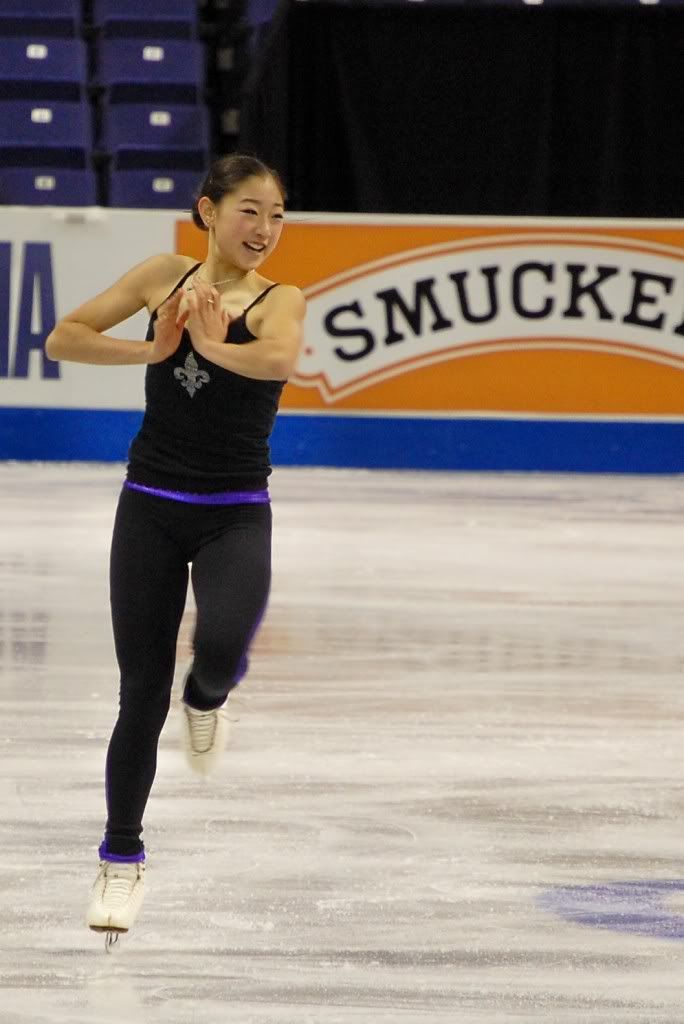
(Left: One of my favorite pictures I took of Mirai Nagasu at the U.S. Championships. Nagasu was most definitely a highlight of the season).

Best Pairs Moments:
Gold-- After back-to-back bronze medals in 2002 and 2006, the Chinese team of Xue Shen & Hongbo Zhao finally captured Olympic gold in Vancouver with two stunning programs. Though their free skate wasn't entirely perfect, the duo capped off an illustrious career and will forever be remembered as one of the greatest teams of all time, alongside Russian legends Gordeeva & Grinkov and Rodnina & Zaitsev.

Silver-- Amanda Evora's heartfelt reaction upon learning she and partner Mark Ladwig had earned a spot on the U.S. Olympic team. The team had spent years hovering around the 4-6 range at Nationals but put it all on the line in Spokane. Perhaps even more impressive is the fact that they were able to gain confidence from their U.S. silver medal and earn top-1o finishes at both the Olympics and World Championships.

Bronze--The free skate of China's Qing Pang & Jian Tong at the Olympic Games in Vancouver. They bested Shen and Zhao in that segment with a world-record score of 141.81 points en route to the silver medal overall in their third Olympic appearance.

Worst Pairs Moments:
-- Keauna McLaughlin & Rockne Brubaker's short program at the U.S. Nationals in January. Two huge mistakes and other small errors took them completely out of contention for the Olympic team, and seeing Keauna cry backstage after was heartbreaking. Here's hoping they come back strong next season!

-- Yuko Kavaguti & Alexander Smirnov's odd long program to a remix of the "Blue Danube Waltz." The strange, gimmicky choreography and Yuko's mid-program costume transformation didn't help, either.

Best Men's Moments:
Gold-- Jeremy Abbott's flawless free skate at the U.S. Championships. In successfully defending his National title, Jeremy landed 8 perfect triple jumps and one gorgeous quad toe loop. He would go on to defeat (eventual) Olympic gold medalist Evan Lysacek by more than 25 points en route to a 9th place finish in Vancouver and a 5th place finish at the World Championships in Torino, Italy.

Silver-- Speaking of Evan Lysacek, his emotionally charged Olympic short program was definitely a highlight of the season. The 24-year old American would score a personal best 90.30 points for that segment before coming from behind to defeat defending Olympic champ Evgeni Plushenko of Russia. His victory in Vancouver marked the first time an American man had won Olympic gold since Brian Boitano in 1988.

Bronze-- Japanese star Daisuke Takahashi's comeback from a nearly career-ending injury is the stuff legends are made of. With each competition, he appeared to get stronger and stronger, and capped the season off with Olympic bronze and a World title, the first Japanese man to medal at the Games and win a World Championship. On top of that, his "La Strada" free skate is my favorite men's program of the season, so kudos to Dai.

Worst Men's Moments
-- Plushenko's incessant whining about how he deserved to win the Olympics over Lysacek simply because he landed a quadruple jump and Lysacek did not. News flash, Evgeni: it's not called "figure jumping." Quad or no quad, Evan was far better than you in terms of spins, footwork, choreography, transitions and the triple jumps. Your silver medal is a great achievement, so stop trying to rain on Evan's parade.

-- Elvis Stojko's rants about "manly skating" and "feminine skating." Like Plushenko, perhaps Elvis should brush up on the judging system rules before running his mouth.

-- Johnny Weir's scores at the Olympics. I don't know what the judges were watching, but Johnny was FAR better than Canadian Patrick Chan in Vancouver. The scores did not accurately reflect what happened on the ice, and Weir's near-flawless programs should have put him into 4th place overall, not 6th.

Best Ice Dance Moments
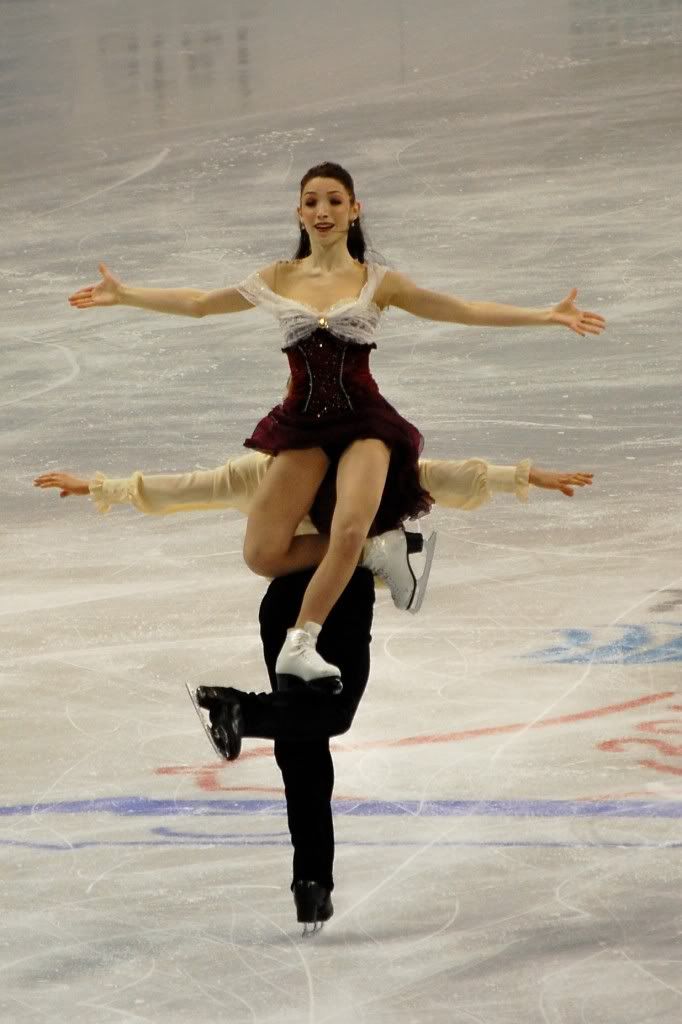
Gold-- The season that Meryl Davis & Charlie White had, winning another U.S. title and becoming the Grand Prix Final champs and World and Olympic silver medalists. They are arguably the most exciting ice dance duo in a long time, and this lift is simply outstanding.
Silver-- Hearing Tessa Virtue & Scott Moir (and all of Canada, really) singing "O, Canada" during the medal ceremony in Vancouver. While I'm not Canadian, it was an amazing, goosebump-inducing moment.

Bronze-- The free dance of Kimberly Navarro & Brent Bommentre to U2 and Mary J. Blige's version of "One." There aren't really words to describe this program, except that it incredibly moving to see live and in person at Nationals. This duo will certainly be missed.

Worst Ice Dance Moments
-- The Original Dance of Russian champs Oksana Domnina & Maxim Shabalin. What. Were. They. Thinking?!?! While their intentions were probably good, their "Australian Aboriginal" program came across as extremely offensive to many. Aside from that, the construction of the program was not Olympic-caliber, and Max's declining knee strength and skating skills didn't help either. And those costumes? Oy.

-- Tanith Belbin & Ben Agosto's scores at the Olympics. They skated three flawless programs yet still finished 4th behind Domnina/Shabalin. Like Weir's scores in the men's event, the marks for Belbin/Agosto had me scratching my head.

Best Ladies Moments
Gold-- Yu-Na Kim's Olympic gold medal winning free skate was an obvious choice. Never before had she performed such a perfect long program, and to save it for the biggest stage of all is quite remarkable. Along the way, she set another world-record score in the free skate of 150.06, and an overall record of 228.56, more than 23-points ahead of silver medalist Mao Asada of Japan. Whether she decides to continue competing or retire from amateur skating, Kim's legend in the skating world is secure.

Silver-- Mirai Nagasu's breakthrough was another highlight of the 09-10 season for me. After a terrible year in 08-09, Mirai came back in a big way with better jumps, a world-class coach and the joy she exuded when she first burst onto the scene in 2007. Her steady climb this season resulted in a silver medal finish at Nationals, a 4th place finish in her senior international championship debut at the Olympics, and a top-7 finish at Worlds. Her winning short program at the World Championships has set her up beautifully as a serious world contender over the next four years.

Bronze-- Joannie Rochette's heartfelt tribute to her late mother, Therese, at the Olympics in Vancouver. It still amazes me that she was able to compete only two days after her mother's passing, and to win an Olympic bronze medal with the stunning performances that she gave is truly awe-inspiring. Kudos to you, Joannie.

Worst Ladies Moments
-- Mao Asada's meltdown at the Rostelecom Cup in October was not a pretty sight. A 6th place finish in the relatively weak field there meant no Grand Prix Final trip for Asada. The only bright spot in all of this was that perhaps her poor performances motivated her for the rest of the season, as she went on to capture Olympic silver and another World title.

-- The entire ladies free skate event at the World Championships can be summed up in one word: "yikes." Falls, popped jumps, and double-footed landings plagued many of the Worlds best skaters last month in Torino. The fact that Yu-Na Kim was able to win silver despite three huge mistakes in her short program (an under rotated triple flip, a messy layback which ended up not counting, and a near-fall on her spiral sequence) and a fall in her free skate is quite telling. Aside from Nagasu's short program, this is was not a memorable event.

-- Carolina Kostner's Olympic-sized implosion in Vancouver is legendary--and not in a good way. It brought back memories of Laetitia Hubert's "human Zamboni" free skate from the 1992 Olympics where she fell four times. Carolina rebounded somewhat at Worlds with a 6th place finish, but 09-10 seems like a season she hopes to forget.

Friday, March 26, 2010

Nagasu jumps to lead at World Championships

16-year old Mirai Nagasu of Arcadia, Calif., stormed to the lead after the ladies short program at the 2010 World Figure Skating Championships in Torino, Italy. She attempted a triple Lutz-triple toe loop combination, and while the second jump was likely under rotated, her inspired performance was still enough to grab first place with a personal best score of 70.40 points.

Olympic silver medalist Mao Asada of Japan currently sits second after being downgraded on her triple Axel attempt. She was able to accumulate 68.08 points, ahead of Finland's Laura Lepisto, currently third with 64.30.

Perhaps the biggest surprise of the night was the disastrous short program of Olympic champion Yu-Na Kim. She opened strong with a triple Lutz-triple toe loop combination, but then under rotated a triple flip and botched her layback spin, and unusual mistake for the defending champ. Kim also lost her balance on her spiral sequence, giving up more valuable points. She is currently 7th, more than 10 points behind Nagasu but still very much in the gold medal hunt, as her personal best free skate score is more than 15 points higher than any of the ladies competing.

American champion Rachael Flatt doubled the second jump in her planned triple flip-triple toe loop combination and scored 60.88 points, good enough for 6th place at the moment.

Full results

Thursday, February 4, 2010

Rippon, Asada golden at Four Continents

America's Adam Rippon jumped from 7th after the short program to take the gold medal last weekend at the Four Continents Figure Skating Championships in Jeonju City, Korea, while Japanese star Mao Asada also rallied from a subpar short program to win the ladies title in the final Olympic tune-up.

Rippon, who failed to qualify for the Olympic team last month at the U.S. Championships (he placed 5th there and is the second alternate for the Games), showed that he will be a skater to beat in the next four years leading up to the 2014 Games. He sailed through 8 triple jumps, including 2 triple Axels, and laid down the performance of the night to upset Canadian Kevin Reynolds, the leader after the short program.

Rippon's teammate Ryan Bradley was 8th after a disappointing short program, but recorded the third-best free skate en route to a 5th place finish overall. It has been a difficult few weeks for the crowd-favorite Bradley after he too failed to land a spot on the U.S. Olympic team, finishing 4th in Spokane. He is the first alternate for the Vancouver Games, though it is unlikely he will get the call to compete. Bradley has been on the senior international scene since 2000, and this Four Continents Championship could very well have been his final competitive appearance.

The third American entry, Brandon Mroz (6th at the Nationals last month), couldn't hang on to a third place short program finish, as he fell just off the podium in fourth. Like Rippon, Mroz will be a threat both nationally and internationally in the years to come, especially if his quadruple toe-loop becomes more consistent.

On the ladies side, Asada turned around what has been an otherwise dismal season thus far by taking the gold medal after a third place short program finish. She was stunning in the free skate, landing 2 triple Axels and earning a season's best score. However, her short program was a mess, as her triple Axel combination was downgraded to a double and she completely popped a planned triple flip. Her score of 57.22 for that segment could be disastrous should it happen again at the Olympics. A sub-60 point short program score would likely place Asada out of the final group for the free skate, meaning the judges wouldn't be as generous with her Program Component Scores, making it that much harder to challenge for a medal of any color, let alone gold.

It's been a tough season for Asada, who only placed second and 6th in her two fall Grand Prix events and failed to make the Grand Prix Final, a title she won last season. Though she recorded a new season's best overall score at this event (183.96), it is still below what teammate Miki Ando received at the Grand Prix Final (185.94), and well below Korea's world champion Yu-Na Kim's score at the Grand Prix in Paris in October (210.03).

Akiko Suzuki, another emerging Japanese star, took the silver at Four Continents after winning the short program, while American Caroline Zhang rallied from 4th to win the bronze. Zhang won't be heading to the Olympics (she was only 10th at the U.S. Championships last month), but Suzuki will, and she heads into that event as a legitimate podium threat.

In the pairs event here, Keauna McLaughlin and Rockne Brubaker of the U.S. won the silver medal with improved programs than what they showed last month at Nationals, and Madison Hubbell and Keiffer Hubbell took bronze in the ice dance event, their first-ever ISU senior championship medal.

Sunday, December 27, 2009

Asada, Ando, Suzuki headline Japanese Olympic team

Mao Asada routed the ladies field at the Japanese Championships yesterday to clinch a spot on the Olympic team. Akiko Suzuki, also an Olympic newbie, and Miki Ando, who is making her second consecutive trip to the Games, join her.

Daisuke Takahashi continued his comeback season by winning the men's event, while Nobunari Oda and Takahiko Kozuka were second and third, respectively. All three will compete in Vancouver, as will the brother/sister ice dance team of Cathy and Chris Reed.

Asada's victory at Nationals helped turn around a sour season thus far. She was handily defeated by World champ Yu-Na Kim in Paris in October, and then fell to sixth at the Rostelecom Cup a week later. Though her triple Axel was downgraded in the short program this weekend, she hit a beautiful triple Axel/double toe loop combination in her free skate to take the title by more than 8 points overall. While her programs this season are still dreadful, Asada still has every ounce of talent it takes to be an Olympic champion.


Suzuki (shown above), only fourth after the short program, rallied to finish second in the free skate and overall. She landed seven solid triple jumps, with a minor, uncharacteristic trip being her only mistake. After battling back from anorexia at age 24, Suzuki appears to be the heavy emotional favorite heading into the Games. However, she is also shaping up to be a heavy medal contender, too. Already this season, Suzuki has defeated World silver medalist Joannie Rochette of Canada, the American trio of Rachael Flatt, Mirai Nagasu, and Ashley Wagner, and Italy's Carolina Kostner. With continued improvement, I have no doubt that Suzuki could be the darkhorse in Vancouver, with the potential to defeat teammates Asada and Ando, who have looked shaky at best so far this season. Ando, who clinched an Olympic spot by virtue of her silver-medal finish at the Grand Prix Final earlier this month, skated cautiously and conservatively here, finishing a distant fourth.

Perhaps the most unlucky skater once again is Yukari Nakano. Four years ago, she won bronze at the Grand Prix Final and defeated Ando at Nationals, yet she was still left off the team. Ando was sent to Torino where she finished 15th, while Nakano went to the World Championships a month later and was fifth. Even with a third place finish this year at Nationals, Nakano finds herself off the team once again because Ando was already guaranteed a spot as the highest Japanese GPF finisher. After being so successful in the 2.5 years following Torino, Nakano has been on somewhat of a downward slide since last year's Nationals, and her shaky performances on the Grand Prix series this year coupled with an underrotated triple Lutz in her long program yesterday means she'll be watching the action from home this February.

The Japanese ladies are arguably the deepest in the world, and any one of them could win an Olympic medal. The Olympic picture is rapidly developing with only 58 days until the ladies short program...

---------------
Japanese Nationals results:
1. Mao Asada (204.62)
2. Akiko Suzuki (195.90)
3. Yukari Nakano (195.73)
4. Miki Ando (185.44)
5. Kanako Murakami (176.61)
6. Haruka Imai (166.16)
7. Fumie Suguri (161.29)

Wednesday, December 23, 2009

Asada prepares for final Olympic tune-up this week at Japanese Nationals

This hasn't exactly been a dream year for Japan's Mao Asada.

After winning the Japanese title last December, she was beaten by both Yu-Na Kim and Joannie Rochette at the Four Continents Championships, and placed a disappointing 4th at the World Championships.

Coming into this season, Asada seemed confident about her chances, but her performances at the Trophee Eric Bompard and Rostelecom Cup events in October were among the worst of her entire career. She could only muster up a 6th place finish in Russia, dashing any hope she had at making the Grand Prix Final in Tokyo earlier this month.

Skating fans on the Web and insiders around the world have been perplexed as to what her troubles are this season. Mao doesn't appear to be injured, nor is she completely unable to land her jumps (her practices at events this season have been stellar). Rather, the problem seems to lie with her competitive focus. Four years ago, Asada defeated World champ Irina Slutskaya at the Grand Prix Final, and though she was too young for the Torino Games in 2006, she established herself as the one to watch during this quadrennium.

Four years older, wiser, and with a World title under her belt, Asada's Olympic time has finally come, but will she be ready? The glare of the Japanese media spotlight is no doubt blinding at times, and the pressure for her and teammates Miki Ando, Yukari Nakano, Akiko Suzuki and Fumie Suguri has got to be immense. Will Mao follow in the footsteps of Midori Ito in 1992, a heavy favorite for Olympic gold yet burdened by the pressure of her home country?

I hope not, as Mao has so many wonderful qualities and is so capable of being a legitimate threat to Kim. However, her programs this season are nothing special, and they hide what makes Mao so great: her elegance, flow, speed, and clean lines.

It will be interesting to see whether she can rebound from a horrific season thus far and recapture some confidence this week at the Japanese Championships. Three Japanese women will make the trip to Vancouver, and while even a sub-par Asada is likely to go, she needs two solid performances here if she is to carry any momentum into the Games. World champion Kim has shown that she too is vulnerable this season, losing the free skate to Rachael Flatt at Skate America and the short program to Ando at the Grand Prix Final.

Mao Asada can be the 2010 Olympic champion, but not without drastic improvement. With uninspired, unartistic, and technically weak performances like she displayed on the Grand Prix Series, a medal of any color in Vancouver is likely out of the question.

--------------

Predictions for the Japanese Nationals: (in no particular order): Ando, Suzuki, and Asada. Nakano was left off the team four years ago in a (controversial) decision, so it's heartbreaking to think that she could (and probably will) be left off the team once again in favor of Suzuki who has been having an incredible season, placing 3rd at the Grand Prix Final. Suguri, a two-time Olympian, should be a non-factor this year.

Tuesday, October 27, 2009

Wagner surprises with silver medal finish

American skater Ashley Wagner made a huge statement Saturday at the Rostelecom Cup: she's still in the game.

Wagner, the 2008 U.S. bronze medalist and fourth place finisher from last year dazzled in her free skate at the second Grand Prix event of the season, electrifying the crowd and coming from behind to defeat 2008 World champion Mao Asada and reigning U.S. champion Alissa Czisny.

Her free skate, set to music from Borodulin's "Prince Igor," contained superb spins, solid spirals and an arsenal of strong jumps. Wagner landed three double Axels in her program, and was credited with four clean triple jumps (although her triple Lutz was assigned a wrong-edge deduction and received a Grade of Execution of -2). Despite all this, she earned a personal best 108.81 points for her program, and rebounded from a fifth place short program to take second overall. Japanese skater and 2007 World champion Miki Ando won the event, while her countrywoman Asada continued her downward slide and only managed a fifth place finish overall. Her chances of making the Grand Prix Final in Tokyo in December are now very much in jeopardy.

While Wagner shone, Czisny fizzled in a disappointing free skate in which she was only credited with three clean triple jumps and fell on a downgraded triple flip. She dropped from second to fourth place overall.

The U.S. ladies field is so wildly unpredictable right now with, realistically, six ladies fighting for only two Olympic berths. Though Rachael Flatt and Mirai Nagasu have yet to compete this season (they will be at this week's Cup of China), Wagner has set the early standard. Her total score of 163.97 from Moscow is the fifth-highest ladies score of the season, though skaters like Flatt and Nagasu could certainly match and surpass it. With the Olympic team being chosen on the results of many competitions throughout the year, there's more pressure than ever on the U.S. ladies to be near flawless at each outing.

Thursday, October 22, 2009

Plushenko's bid for second Olympic title begins in Moscow this weekend

After a three year hiatus from eligible competition, 2006 Olympic champion Evgeni Plushenko of Russia is back this season hoping for a repeat victory come February.

The three-time World champion Plushenko was nearly unbeatable during the 2002-2006 quadrennium, losing only twice (once to France's Brian Joubert and once to Emmanuel Sandhu of Canada). Unfortunately for him, the competition isn't as easy this time around.

Since his absence, numerous men have staked their claim in the figure skating world, and the field is so deep now, it's hard to predict exactly just where he fits in. The top two men at last year's Worlds -- American Evan Lysacek and Canadian Patrick Chan -- have proven that you don't need a quadruple jump to win big anymore. Instead of relying on that one jump, today's group of male skaters seem to be focusing on refining the "overall package:" clean and consistent triple/triple combinations, high level spins and footwork sequences, and more difficult transitions to boost their Program Component Scores (PCS). While Plushenko's success rate with the quad is certainly the highest of the men that will be competing in Vancouver, his spins and choreography leave much to be desired.

While he has the potential to outclass the field jump-wise, Plushenko must pay attention to the other aspects of his skating if he hopes to be victorious at the Games. Skating has evolved quite a bit even in the past three years, and he cannot rest on his laurels and hope to win on his skating skills alone. His PCS were astronomically high in Torino in 2006, but there won't be that big of a gap between him and his competitors this time around. Skaters like Lysacek, Chan, Johnny Weir, Daisuke Takahashi, Nobunari Oda and '06 Olympic runner-up Stephane Lambiel will provide some incredibly tough competition.

I've never been Plushenko's biggest fan, but I do respect him as an athlete and competitor. It will be very interesting to see what happens this weekend in Moscow when he competes at the Rostelecom Cup, where his only other threats seem to be Weir and Japanese skater Takahiko Kozuka. A win in this field is certainly attainable, but a second Olympic win this winter will prove to be much more elusive if he enters the Games with the same mindset and types of programs he did four years ago.

-------
In other Rostelecom Cup news, Miki Ando reportedly had a great practice today, while Mao Asada struggled on the triple Axel, only achieving about a 50 percent success rate. Whether it's fatigue (this is her third competition this month) or the pressure of the Olympic season catching up with her, it will be interesting to see if she can improve upon her performances last week at the Trophee Eric Bompard, where she was defeated by rival Yu-Na Kim by more than 36 points.

Sunday, October 18, 2009

Kim sets new world record; Canada, Japan, Russia also golden in Paris

Yu-Na Kim just keeps rolling.

The 19-year old phenom from South Korea set a new world record Saturday at the Trophee Eric Bompard in Paris, the first Grand Prix event of the season. Her overall score of 210.03 demolished the rest of the ladies, and put her ahead of rival Mao Asada by more than 36 points.

After a 76.08 point short program, Kim probably could have skated around the rink doing cross-overs and single jumps and still won the gold medal. Instead, she landed five clean triple jumps with ease, including a difficult triple Lutz-triple toe loop combination as well as a double Axel-triple toe loop combination. Her only mistake came on a planned triple flip; heading into it, she said something didn't feel right. Rather than risk a fall and disrupt the flow of the program, Kim simply skated right through the element, which makes her world record scores even more impressive.

Asada, the pride of Japan, finished a distant second after an up-and-down free skate. She nailed her opening triple Axel combination after botching it in the short program, but then underrotated other jumps and fell on a double Axel at the end of her program. On top of that, her program is uninspiring. The music and choreography are far too heavy for this exuberant skater, and all of the joy seems gone from her skating. Whether this is her coach Tatiana Tarasova's "influence" or not, something isn't right. One can only hope the Japanese Skating Federation will step in and demand either a coaching change or some music changes before Vancouver.

Another Japanese skater, Yukari Nakano, was third, with Americans Caroline Zhang and Alexe Gilles in fourth and fifth, respectively. Zhang is still recovering from a knee injury this summer, and it was evident in her performances here. The good news for her is that her second event is five weeks away -- plenty of time for her to regroup and train hard. For Gilles, a top-five finish in her senior Grand Prix debut is nothing to sneeze at, and she'll look to build upon this momentum a month from now at Skate America.

In ice dancing, Canadians Tessa Virtue and Scott Moir took gold, as expected. Their stirring free dance to music by Gustav Mahler features intricate and inventive lifts, including one where Virtue "jumps" off of her partner's leg into a full turn and then lands on the ice next to him. With reigning World champions Oksana Domnina and Maxim Shabalin out right now due to injury, teams like Virtue/Moir and the American teams of Meryl Davis/Charlie White and Tanith Belbin/Ben Agosto have got to be dreaming big of the top prize in Vancouver. The world of ice dance is so unpredictable and deep right now, that it may very well be the most exciting discipline of the season.

In the men's event, Japan's Nobunari Oda was flawless in his "Charlie Chaplin" program. Even though he has yet to medal at the World Championships, Oda will be a serious threat to the Olympic podium come February, with or without a quadruple jump. Tomas Verner took silver here, and American Adam Rippon won his first Grand Prix medal by taking the bronze. Perhaps the most shocking story of the men's event was Brian Joubert's disappointing fourth place finish on home ice. Joubert looked lethargic and slow, and his jumps didn't have the ease and fluidity that they normally do. Although it's early in the season, Joubert must improve drastically for his second event if he has any hopes of making the Grand Prix Final and building momentum towards the Olympics.

Finally, in pairs, Russians Maria Mukhortova and Maxim Trankov were the surprise winners over two-time and reigning World champs Aliona Savchenko and Robin Szolkowy of Germany who placed third. Canadians Jessica Dube and Bryce Davison were second, while American's Rena Inoue and John Baldwin used their trademark throw triple Axel to vault them from fifth to fourth in the standings.

The Grand Prix series continues this coming week in Moscow at the Rostelecom Cup. 2006 Olympic champion Evgeni Plushenko makes his return to competition here, while Asada will face off against her main Japanese rival, 2007 World champion Miki Ando. The United States will be represented well by Davis/White in ice dance, Keauna McLaughlin and Rockne Brubaker in pairs, Alissa Czisny and Ashley Wagner in the ladies event, and three-time U.S. champion Johnny Weir in men's.

Monday, October 12, 2009

Cohen's absence doesn't dampen excitement in Grand Prix opener

Sasha Cohen's withdrawal from Trophee Eric Bompard - the Grand Prix series opener - didn't come as much of a shock to those in the skating community.

Cohen, the 2006 Olympic silver medalist, had her comeback bid interrupted last Thursday when she announced that she would be withdrawing from the event due to tendinitis in her calf. Although this is bad news in her attempt to make a third consecutive Olympic team, the ladies field in Paris this week is still the deepest of all the Grand Prix events.

In her first competition of the season, reigning World champion Yu-Na Kim of Korea looks to capture her eighth Grand Prix gold medal. Armed with a new triple-triple combination (Lutz-toe loop), Kim is the overwhelming favorite here, though the competition will be nipping at her heels.

2008 World champ Mao Asada will be battling it out with her arch-rival Kim for the top spot. Asada, the 19-year old Japanese phenom, appears to have plateaued or even regressed since her '08 Worlds win. At the recent Japan Open invitational, Asada was only credited with three clean triple jumps, and her trademark triple Axel was downgraded and awarded a Grade of Execution of -2.24. She finished third among the ladies competing there, far behind Canada's Joannie Rochette and nearly 8-points off of Laura Lepisto of Finland. With the plethora of top ladies competing in Paris, Asada cannot rely solely upon her Program Component Scores to carry her to the podium.

Among the other competitors are Italy's Carolina Kostner, a two-time World medalist, and Japan's Yukari Nakano. Kostner changed coaches in the off-season, and is now under the tutelage of iconic American coach Frank Carroll in Los Angeles (Carroll also coaches Americans Evan Lysacek and Mirai Nagasu). In an Italian TV news clip that recently surfaced, Kostner's jumps look more secure and solid, marking her as a legitimate threat to Kim and Asada.

The United States women will be represented by Caroline Zhang and Alexe Gilles. Zhang, the reigning U.S. bronze medalist, is recovering from a summer knee injury, but should be much improved over her form at the Golden West Championships in early September. Known for her consistency, Zhang could very well find herself in medal contention, though she may have to rely on out-scoring the rest of the field on spins and hoping for mistakes from the other ladies.

In the other disciplines in Paris...Brian Joubert will face off against Japan's Nobunari Oda, with American Adam Rippon looking to break through for his first Grand Prix medal. Tessa Virtue and Scott Moir of Canada will likely be golden in ice dance, and two-time World pairs champions Aliona Savchenko and Robin Szolkowy of Germany will look to top Russian's Maria Mukhortova and Maxim Trankov, Canadians Jessica Dube and Bryce Davison, and Americans Rena Inoue and John Baldwin.